Aug 28, 2026
Hector Rodriguez brings a different kind of resume to healthcare IT leadership. Before joining Humboldt Park Health as Vice President of IT in 2022,…




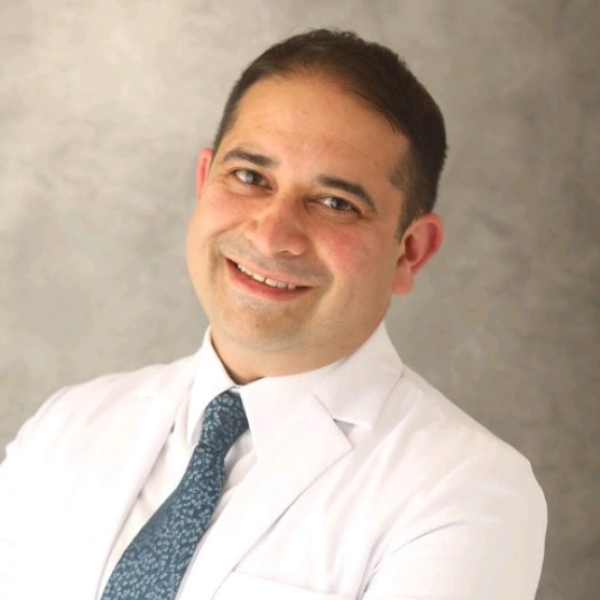
What happens when a practicing hospitalist becomes both CMO and CMIO? Dr. Devjit Roy shares his journey from COVID frontlines to dual leadership at Nathan Littauer Hospital. As author of Between Heartbeats and Algorithms: Reclaiming What Matters in Healthcare, Dr. Roy makes a powerful case for compassion and presence in an era of metrics and automation. Hear how he keeps clinicians connected to mission, optimizes MEDITECH in a rural setting, and approaches AI as a flashlight rather than a steering wheel. From digital health equity to physician voices in technology decisions, this conversation offers practical wisdom for healthcare leaders navigating the intersection of humanity and technology.
.png)
Key topics:
Connect with Dr. Devjit Roy, CMO, CMIO, and VP of Medical Affairs at Nathan Littauer Hospital
Did this topic resonate with you? Reach out and start a conversation to learn more.
Need help optimizing your MEDITECH implementation? MEDITECH professional services can help identify gaps and create a roadmap for improvement.
Serving a rural community? Learn how IT advisory services can extend your team's capacity.
Phil:
Welcome to The CereCore Podcast, where we focus on the intersection of healthcare and IT. From practical conversations to strategic thought leadership. Let's unpack the decisions, challenges, and journey of those whose purpose it is to deliver technology that improves healthcare in their communities. Today, we are pleased to welcome Dr. Dev Roy to The CereCore Podcast. Dr. Roy is the Chief Medical Officer, Chief Medical Information Officer, and Vice President of Medical Affairs at Nathan Littauer Hospital in Gloversville, New York. He brings a rare perspective as both a practicing hospitalist and physician leader, overseeing clinical quality, strategy, and informatics for a rural hospital and its network of clinics.
He is also the author of Between Heartbeats and Algorithms: Reclaiming What Matters in Healthcare, a book that explores how modern medicine risks losing its soul to metrics, data, and automation. Through 15 patient stories, Dr. Roy makes the case for a return to compassion, presence, and people-centered leadership in a system driven by efficiency. From optimizing MEDITECH in a rural setting to exploring the role of AI in small hospitals, Dr. Roy offers a thoughtful take on the future of healthcare IT and what it really means to lead with purpose. Dr. Roy, welcome to The CereCore Podcast.
Dr. Roy:
Oh, thank you. I really appreciate this. I'm very excited. It's good to see you again.
Phil:
We're thrilled to have you, and really enjoyed getting a chance to meet you at Chime back in the fall and had a great conversation and appreciate you being a guest. So, you hold a number of titles, but I wanted to talk specifically about the CMO role and the CMIO role. And I'd love to know for you, what's the intersection like that from a day-to-day perspective between those two roles?
Dr. Roy:
Honestly, it's an interesting intersection. I think what it is is, on the clinical side we're just pattern recognitionists. We're trying to figure out what's going on and we're just trying to come up with what makes sense for the person in front of us. The CMIO side though, it's taking in technology, emerging tech, current digital readiness, and to try and not only use what is out there in technology, but make it useful for that clinical encounter. And so, I think what's interesting is with the day-to-day I'm always trying to figure out how can I use tech to make my life easier, of course, but more importantly, how can I get to that diagnosis faster? How can I help this person in front of me quicker? And then with the administrative hat, it's how can I help my docs, my clinicians to not be burnt out? How can we use tech to make healthcare make sense?
Phil:
Oh, that makes perfect sense. And you touched on a lot of this stuff. So, we referenced your book earlier on, but between Heartbeats and Algorithms, what a great title. You make a powerful case for putting compassion in presence. And I love that you use presence back at the center of healthcare. So what inspired you to write this?
Dr. Roy:
Yeah. No, that's a great question. So honestly, actually during COVID times, I remember there was a lot of uncertainty. And I was one of those frontline COVID docs. I was a palliative care doc and a hospice doc. And I was also a part of the ethics committee. And so, I remember there was just a lot of uncertainty. And actually, for those couple of months, so we were kind of in ground zero in Westchester in New York when the first couple of cases started. And what was tough is I genuinely didn't know whether I was going to make it. I remember, so me and my wife, we had just gotten married, and the hope was we had moved down to Westchester, New York to be closer to parents, to make the parents happy.
Phil:
Free babysitting.
Dr. Roy:
Yeah. So actually, and this is very personal, we went through a miscarriage during that time, just a lot of stuff. And I remember I was sleeping in my car so I wouldn't affect Pyle. And I remember there was one night where I was worried that, "Hey, I've learned so much. Let me just start writing down things that I've learned." And it was funny, because the lessons that I've learned mostly came from patients. It came from a person who looked back at their life and thought, "Oh, I wish I had done this, that, and this." And I'm like, "Let me just start writing these things down." And that's kind of where it started.
And ultimately it continued to evolve. And it was funny, a couple of, just about a year and a half ago I was cleaning out our home and now we have two kids and our family is doing well in Upstate and just trying to make sense of life. And so I was like, "Wow, maybe I should continue to back on it." And that's where AI was starting and all this stuff in tech. And I'm like, "You know what? So much has changed since COVID times to now where algorithms really dictate care. And standardization makes sense, but the humanity part is also very important. How do we just remind clinicians, the healthcare sector that yes, we have to marry them. It's not going to be easy, but how do we do that?" And sorry, I kind of went on a thing, but ...
Phil:
No, it's always interesting to see where inspiration comes from. And sometimes it's from highs, sometimes it's from lows, sometimes it's through tragedy. And just it's the folks that ... It's very impressive when people can take that, take those experiences, draw upon it, and then put something together. And you talked about it, right? You referenced just inspiration from patients as part of that process. And you share a number of those stories there in the book. Is there one that's kind of stayed with you that really helps shape how you lead?
Dr. Roy:
Yeah, absolutely. Actually, definitely a couple. I think the first one that comes to mind, there's one story of a physician who actually had ALS. And I just remember he said this one statement, "If you're not at the table, you're on the menu." And I remember when we had dinner, actually, I remember saying that. I was like, "That was the one thing that got me into leadership in that it just stuck with me." I mean, frontline physicians, we were not a part of the build of EMR. And I've been a part of four different EMR rollouts in four different organizations, and it's always the same. Even if I'm in a leadership role sometimes, if you're not at the table, you're on the menu, because somebody is making a decision about a workflow.
But what's interesting is I think the other part, there was a story I remember where it was a patient who had very much fragmented care. And the fragmented care needed to bring all the docs, all the docs that are leaders in their own right together, just to talk through what's going on, rather than, "Hey, I'm the cardiologist. You're going to have to take this antihypertensive and this statin." "I'm the endocrinologist. You have to take insulin." "I'm the," I don't know, "psychiatrist. You have to take this." And that one kind of really brings back how coordination, alignment, bringing everyone together is so important. But honestly, I think, and I know I'm just kind of thinking about that, the other one was there was a doc who ... And this is a failing of all docs. We tend to say yes to everything. We don't say no. And this doc, he was a good friend of mine. He did commit suicide. And part of that was because he was taking care of everybody else, but he was the type of person who just would overlook the care for himself.
And it's amazing. I mean, I see this every day, and this is not only in clinical medicine, this is colleagues, friends in administration. If we're in healthcare, the mission is to help people. That's why we do this. And if we keep doing it while overlooking ourselves, it really burns us out. So, I think what it is is, there's that humanity piece, that piece of connection between people and, of course, sustainability. And I think that's where some of those chapters, obviously you can tell it still resonates just to think about it.
Phil:
Oh, of course. Of course. No, I appreciate you sharing those. And yeah, I mean, the book is very personal to you, and I think that's what makes it speak to so many people. And you had a chapter, I think it was called something about when the algorithm got it wrong. Can you talk maybe just a little bit about how data's great, but it really shouldn't be a replacement for judgment? And maybe how do you strike the balance between trusting the technology, but at the same point, trusting your instincts and training as a doctor?
Dr. Roy:
Yeah. Honestly, I think it's so important right now. So, I think algorithms are more ... They should be used as flashlights rather than steering wheels. I think tech is great, but we have to slow down. We have to ... The medical school training, the residency training, the fellowship training, it not only made us understand the pattern recognition that we develop, but then when we start to practice we really start to develop that art. And it's kind of interesting, because I'm at the point in my career, I could look at a person, I could have a conversation with them, and I could tell exactly what is going on. I could tell what's happening with their family. I can read their body language. I could tell ... There's so many different neural networks that are at work.
Now, the algorithms cannot replace human judgment right now, right? Although at some point, I don't know, judgment to me can be an algorithm, right? If it's not that. So that case, I remember it was actually a sepsis case. And what's interesting about sepsis is you have so many different definitions. You have sepsis one, sepsis two, sepsis three, you have the insurance company definition, you have the definition that's accepted by New York State, which is different than the one that United Healthcare accepts. And so, what's interesting is not only do you have definitions, but then you have clinical signs and objective signs that are so similar that is extremely hard to differentiate, unless you actually see that person, unless you actually it's like, "Wait a second, that breath sound is really this, not that. Or that heart sound is this, not that." And at some point, I'm sure the tech will get there, I'm sure.
What I love about AI, what I love about ... It's a very lean system. There's a lot of process improvement. It keeps getting better, it keeps learning, and that's great, which will allow us as clinicians to be able to focus our tasks on other things, like taking time with the patient, being present, right? And so, I think now while we're in this transition period we have to be stewards. We have to teach the AI just like it's a medical student, like it's a resident, we have to embrace it, because it can actually allow physicians, nurse practitioners, PAs to be even more is, I guess ... Yeah.
Phil:
No, it makes perfect sense. That makes perfect sense. No, I appreciate that. So, you're currently at Nathan Littauer, serves really a broad rural area. And so, maybe talk a little bit about some of the challenges that you face as a rural CMO, CMIO, that are unique to rural versus say an urban market?
Dr. Roy:
Sure, sure. There's a lot of things that keep me up at night. And it's workforce, it's financial margins, it's solutions or tech solutions in an aging infrastructure. Like with workforce, not too many clinicians are able to practice in a rural setting because ... So, for me, I'm a family medicine trained doctor. I have five other board certifications, whether it's in hospital medicine, palliative medicine, obesity, lifestyle, and I mean, infectious disease, dermatology, cardiology, neurology. I mean, this is our day-to-day. We don't always have a specialist on call, right? We got to figure it out. It's like being MacGyver or the A team, right? You got to just figure it out, put some things together, because we got to stabilize.
And then what's really tough is even if you identify a patient that your system can't manage, well, we still got to get them somewhere else. Well, what if you don't have an ambulance? What if it's snowing? What if they don't have beds? So, then we have to still keep taking care of them. And a very interesting concept with workforce is most residencies and fellowships, they're training with the best technology, the best equipment. So, if there's a surgeon or an OB doc, I can't necessarily bring them in, because we don't have a da Vinci. We don't have that tech. AI was a big one. A lot of fellowships and residencies are now training on AI, but AI is expensive to integrate. So, it's interesting, because a rural setting ends up actually getting aged out or teched out, if you will.
But then the financial part is tough. I mean, there's always changes in CMS reimbursement or insurance reimbursement, and things are getting expensive. So, the care to deliver things to patients is becoming expensive, but the reimbursement is decreasing. So, your margin ... And I remember there was a CEO that mentioned, "Hey, no margin, no mission." And so, that's where actually, and I know CereCore has actually been helping us out, especially to kind of catch up.
There are these different vendors or just companies, folks that honestly, if it weren't for that, we wouldn't even have a chance to catch up. And so actually, and you don't have to put this on the podcast, but I really do appreciate that. And I know our system does because it's just so ... The folks in this region deserve the care and there is a reality of digital health equity where people in rural places won't have access to the tech as it evolves. So, anyway, I appreciate you guys, and definitely you, Phil.
Phil:
Well, I appreciate that, Dr. Roy. And certainly, you mentioned mission and you mentioned that the health equity and the fact that it doesn't really matter where you live, you still deserve to have that quality of care. And I think it's part of our mission to help partner in that way to help you guys live out yours, mission standpoint. And mission and meaning, right? It's very, very important. And I see it even escalated in the rural communities. And so, as you interact and interface with your clinicians, physicians on a daily basis, how do you keep them connected and motivated to that mission, especially with some of the things that you talked about, right? The tech inequity, the documentation, metrics, the burnout.
Dr. Roy:
Yeah. Yeah. It's a tough thing. Actually, when I started at [inaudible 00:20:48], what's interesting is I noticed that a lot of our physician population was very disengaged. And why not? We're just coming out of a pandemic. We had actually just switched over to a new EMR, and any EMR transition is a lot. Change is a lot. And I've noticed a doc's mission is typically pretty simple. We're just trying to help the person in front of us, right? But we also have families. We also have kids. We have sons, daughters, a wife, a husband. And for me personally, I was putting in 12 to 16 hours a day, right? And if you sleep eight hours a day, then how much time do you really have left?
And so, I think the meaning is what matters to clinicians, but also being seen and heard, and not only heard, but acted upon. And I think it's what I've been trying to do. And I can say this, I enjoy being a hospitalist more than I enjoy being a CMO, CMIO, VPMA administrative thing. It's because for me personally, I enjoy the person's story. My why is I love learning about a person's story so I can better myself and help others. I think what's tough is there's not enough clinicians getting into administrative medicine, getting into the system, getting into project management, getting into Lean Six Sigma, getting into operations or strategy or advocacy. There isn't. And I said this before, if you're not at the table, you're on the menu. And so, I've been doing this purposefully just to inspire and get more clinicians to the table, because we need to be a part of this AI revolution. And if we're not, well, then we're just going to repeat the same things that we did with EMRs.
Phil:
No, you're absolutely spot on. And just even at the very least, having that education outside of your specific discipline to give you additional perspective. So, as that perspective grows, then I think the efficiency grows as well, so that's spectacular. So, you've mentioned the EMR and you've been working to optimize that and make it really better for the organization. Any wins or changes that you've seen in that regard?
Dr. Roy:
Well, and I'll tell you what, so we have MEDITECH Expanse, and MEDITECH, it definitely was an upgrade from where we were. And there, especially on the inpatient side, I think, and actually CereCore helped us with this, just to identify gaps in a rollout. And that's huge for us, because we don't know what we don't know. And I think what's important is, while we're trying to optimize an EMR, and we've all been in different planning meetings, right? We've all been in these meetings that can theorize what'll help, but it isn't until you're actually in it that you can't really tell what's a problem and what's not. And that's another thing where partnering with external companies, vendors for us helped us. And actually it was James Wellman, James is a great guy. He's our CIO. And he brought that external view to our organization, which we didn't really have.
It's the institutional mindset, right? "Oh, we're doing things fine." But James, he did such an awesome job in identifying, "Hey, listen, y'all, yeah, you guys are doing good, but you guys can be doing a lot better. Let's look at it this way." And I think that's where it's important to be humble, to just be humble to the process of improvement and to be curious on, "Hey, can we actually get better?" But then that grit, that discipline to stick to it is ...
Phil:
You've got to have the trifecta there to make it successful. You're spot on. You're spot on. Well, you talked about that kind of shift in philosophy when it comes to leveraging partners. What do you all as an organization look for in a partner that you're going to engage with? I think we talked a little bit about it earlier, right? An organization that would, in essence, buy into and help you achieve mission, but what do you all look for?
Dr. Roy:
So to be honest, and this is what not only with y'all, but we've seen this with other partners, it's the honesty over the hype. I don't need a sales pitch, right? I just need what makes sense. I think being in a rural setting, understanding our constraints is a big thing, because we ... Sorry, that might have been my computer. We might have not been digitally ready to accept certain technological advances. We don't have the infrastructure. We might be still on Windows 7, I don't know. But these are things that James has honestly uplifted our system on. Again, he's our CIO. He's uplifted our systems just to have us be digitally ready. And that took him a couple of years, right?
Phil:
For sure.
Dr. Roy:
I think accountability is a big thing, meaning I think in a rural setting we have a difficult ... Like folks in a rural system, it takes us a lot to trust, because we've been figuring this out. "Oh, we're good on our own. Why do we need you? We can MacGyver with this." But, ultimately, getting through that initial wall is a big thing. And I think the other piece would be finding a good partner is about long-term partnership. I'm all about the relationship. To me, the relationship really matters. And of course, for our frontliners who are on this every day, just respecting their realities, making sure that the interventions make sense to them. I don't know.
Phil:
I know, spot on. So, we've touched on a lot already in this conversation. I think one of the big things that you've brought out is just keeping that clinician voice at the table, particularly when there's big IT or clinical decisions that are being made. What's your approach to that?
Dr. Roy:
Yeah. I think when it comes to AI, AI is moving fast, and that's a good thing. As an administrator, what's funny, and my CEO tends to hold me, is smart in trying to slow me down. I'm the gas. This is what we do. So, I'm all about moving fast. Details don't matter. Let's just implement. The reality of it is, is that AI is something that we got to be very thoughtful about and it is moving very fast. It's going to remove clinical burden or reduce it. I think to me, when it comes to AI, when it comes to these texts, it should really support how we go through our decision making, but we as physicians have to be the stewards of it. We can't allow it for decision making. I don't know if I answered your question. I'm sorry.
Phil:
No, I think you were talking just really about there's a lot of things to be optimistic about from an AI perspective, but there's also those areas of caution. And I think you laid that out well. And then having clinicians and physicians at the table as those decisions are being made are just so vitally important. It's not just an IT thing. It truly has to have that collaborative, everyone at the table setting the rules.
Dr. Roy:
Yeah. Well, and the way I think of it, so when EMR kind of rolled out, that's around the same time that problem lists and medication lists all rolled out. And doctors don't think the way that problem lists were made. And every single problem list in every EMR is broken, broken in a clinician sense. But it's funny, the way that AI is handling it, it's so much more clearer for a doc. But I guess my point is, if docs aren't a part of ... And nurses too, right? If clinicians, if frontliners are not a part of the build, then what's going to be built is not going to make sense.
And then it's just going to be ... It was funny, there was a sense of learned helplessness from me after years and years of using EMRs and not seeing the light. It's like, "Oh, well, I guess I'm now a coder, and I guess I'm now a typist. I'm not a diagnostician anymore. I'm not a ..." The roles have changed, because we weren't necessarily there, a part of the build.
And that's where, and I have to call out in our hospital, our IT team is phenomenal. We have Lance, we have Moshkin, and again, James at the helm. And Melissa, these are folks that truly know how to bring in clinicians early, which is, I mean, I forgot whether that's in the PMP studying or like project management or in Lean Six Sigma. You got to bring in the stakeholders together first to run any project. And I don't know if that was necessarily there when EMR started 20 years ago.
Phil:
Or longer.
Dr. Roy:
Or longer, right?
Phil:
Exactly. No, I think that's great. So, this is a question that we're asking everyone, and it's more for our internal team. We have a lot of team members that listen to this, and many of them work behind the scenes and they don't necessarily see the impact of the work that they do. And so, what would you want to tell those team members, whether it be CereCore or someone else that does these sorts of things for you all about their work and how it impacts both you as a clinician, physician, but then also patient care?
Dr. Roy:
Sure. So, the impact that you guys have on patients, it's huge. I mean, it's just plain and simple. The patient won't see that. And in fact, they always say, if the patient or the clinician doesn't actually feel it, that means IT did their job. Or anything in tech. If the tech is working, yeah, great. But I think where the impact that, whether it's, again, everyone that makes healthcare work, whether it's just internet, whether it's our EVS staff, whether it's our engineering staff, whether it's our CDI, health IT, your team, with just identifying our gaps, all of these things, they add up. And at the end of the day it's a person that needs help. And that's where ... And I can't stress this enough, everybody's mission in healthcare is just to help another person get better.
This is kind of one of our missions at our hospital. We want to be the best part of your worst day. When you're in a hospital, when you're in a nursing home, when you're healing, when you're in a hospice home, anytime in healthcare, it sucks. Whether you're the patient or a patient's family member. And for those of us that are kind of the face of it, we can't do what we do without everything that's happening in the background. And there's a lot of folks, a lot of vendors, a lot of companies that have been helping us to be able to make that a reality. And you guys are one of them. And again, you have no idea how much that's appreciated.
Phil:
Appreciate that. And certainly well said. So, last one, we'll wrap up for today. For healthcare leaders that are listening to this and who feel like they're stuck between the tech and the tech pressures and then the people pressures of the organization, what advice, final advice would you have for them?
Dr. Roy:
Oh, wow. So, that's a really good question. To be honest, I think ... So, for me, I will never regret slowing down optimizing systems or technology if it's going to help the person in front of me. Absolutely, we have to make sure that our patients are being taken care of, that our clinicians, our frontliners are being taken care of. That our staff, our people in healthcare, whether they're IT, nutrition, just the team is being taken care of. So, I think by making sure that our healthcare leaders are ... And I kind of said this before, that we're humble to the changes, we're curious to what's going to happen, and that we stay with grit to make sure that we're doing what's right for the person in front of us, be it a colleague, a patient, a family. I think then you'll really never really regret slowing down to preserve this humanity in us.
Phil:
That's a perfect wrap up. Dr. Roy, thank you so much for joining us today on The CereCore Podcast. I always enjoy our conversations.
Dr. Roy:
Oh, thank you.
Phil:
And now we get to share one with the listening audience as well.
Dr. Roy:
Yeah. No, again, thank you for this. And I definitely appreciate you, your team. And no, we got to get together again.
Phil:
We will. We will. Well, thank you so much.
Dr. Roy:
Thank you.
Phil:
Thanks for listening to The CereCore Podcast. We hope you enjoyed this conversation. Follow us on your favorite podcast platform for more episodes. Connect with us on LinkedIn. Visit our U.S. website at cerecore.net. And for those abroad, visit cerecoreinternational.net. Learn more about our services and find resources. At CereCore we are healthcare operators at heart and know the difference that the right IT partner can make in delivering quality patient care 24/7. Let's help make IT better. Here's to the journey.
Hector Rodriguez brings a different kind of resume to healthcare IT leadership. Before joining Humboldt Park Health as Vice President of IT in 2022,…
What does healthcare leadership look like when you never forget there's a human on the other side of every interaction? In this episode of The…
In this episode of The CereCore Podcast, we are joined byJames Wellman, VP and CIO at Nathan Littauer Hospital and Nursing Home in Gloversville, New…
Let us know how we can support your initiatives and take some of the heavy lifting from healthcare IT.