Aug 28, 2026
Hector Rodriguez brings a different kind of resume to healthcare IT leadership. Before joining Humboldt Park Health as Vice President of IT in 2022,…



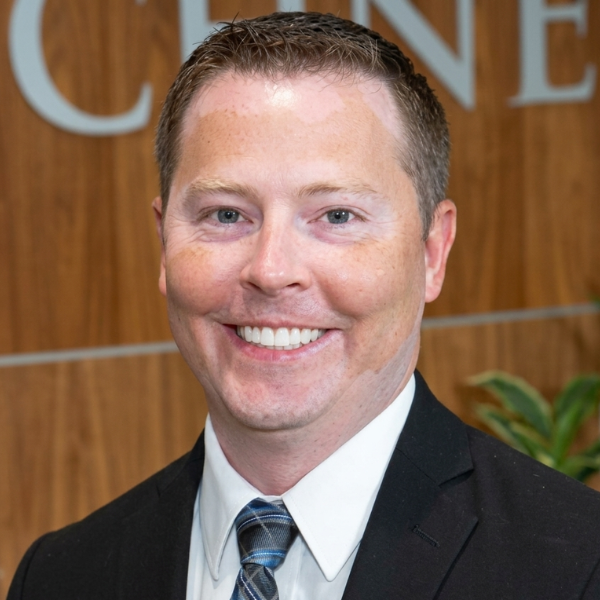
What does healthcare leadership look like when you never forget there's a human on the other side of every interaction? In this episode of The CereCore Podcast, Dr. Ryan Stone, Vice President and Chief Medical Officer at Schneck Medical Center in Seymour, Indiana, joins us for a conversation about what more than a decade of dedicated service to a single community has taught him about leadership, quality, and technology.
.png)
Dr. Stone traces a remarkable path, from a med-peds hospitalist who fell in love with rural medicine to a physician executive trusted to lead Schneck's clinical strategy. He shares how Schneck has built and protected a Malcolm Baldrige and Magnet level culture of quality, what it took to bring physicians and nurses fully on board with the MEDITECH Expanse transformation, and what has made CereCore's partnership with his team genuinely valuable from the inside.
This episode is for anyone who believes the best healthcare leadership starts with presence, not a title.
Key topics:
Building and protecting a Malcolm Baldrige and Magnet level culture of quality
What the MEDITECH Expanse transformation meant for physicians, nurses and patients
What a true technology partnership looks like, and the CereCore team members who make it work
Leadership advice for building stronger relationships with physicians, today and for the next generation
Where AI can genuinely help clinicians, always with a physician leading the decision
Connect with Dr. Ryan Stone, Vice President and Chief Medical Officer at Schneck Medical Center.
Host:
Welcome to the CereCore Podcast where we focus on the intersection of healthcare and IT from practical conversations to strategic thought leadership. Let's unpack the decisions, challenges and journey of those whose purpose it is to deliver technology that improves healthcare in their communities. Today we are pleased to welcome to the CereCore podcast Dr. Ryan Stone. Dr. Stone is the vice president and chief medical officer at Schneck Medical Center in Seymour, Indiana.
A doctor of osteopathic medicine with a master in biomedical science. Dr. Stone has been part of the Schneck community since 2015, serving as an internal medicine and pediatrics hospitalist for over 10 years and now as a physician executive guiding clinical strategy and quality across the organization. He completed his medical training at Kansas City's University School of Medicine and Biosciences and completed his internal medicine and pediatrics residency at the University of Missouri, Kansas City. Dr. Stone brings a unique perspective to this conversation, the ability to see technology, quality, and clinical culture through the eyes of someone who's lived it at every level. Dr. Stone, welcome to the CereCore Podcast.
Dr. Ryan Stone:
Thank you very much.
Host:
So let's start at the beginning. Tell us what led you to become a physician and what you love most about practicing medicine.
Dr. Ryan Stone:
Yeah, kind of a long journey for me to end up in medicine, but the ultimate thing was the human connection that comes with medicine. And so for me personally, I started from a faith-based university and undergrad and really felt called to help take care of people from that foundation. And so went into my master's program for biomedical sciences to prepare for medical school and then landed in medical school there in Kansas City. And all through my medical school journey really was drawn to pediatrics and really loved working with kids. And towards the end of my medical school career, found this unique combination of internal medicine and pediatrics to be able to take care of everybody from birth to adulthood. And so fell in love with it, really fell in love with adolescents at the time and really helping our adolescents transition from the pediatrician mindset to adult health.
And so really was anticipating moving in that direction for residency or after residency, but in the midst of residency, really fell in love with hospital-based care and the impact that you could have on a patient and their family in their most critical time of health and just really being able to journey with folks in the middle of crisis and to be able to oftentimes make them better, but also in those times where death is imminent to be able to journey alongside of them in that very human moment as well. And so I fell in love with the hospitalist medicine aspect of things and really wanted to be able to do both pediatric hospital medicine and adult hospital medicine, which led me to Seymour here at Schneck Medical Center where they had established a med-peds hospitalist program and so was able to come in and join that program in 2015 and have never left and I've just loved every minute of it.
Host:
Wow, that's excellent. And you said you joined Schneck in 2015 and it's a meaningful choice to build a career in a singular community. So what's kept you in Seymour and perhaps was there a moment where you knew you wanted to take that also next step into more of that executive leadership role?
Dr. Ryan Stone:
Yeah. So again, the human connection is really what drove me to medicine. I would say the human connection is really what has drawn me to Seymour and kept me here because when I came into Seymour, really the only thing I knew was that the Interstate 65 was here and my family was about an hour away, we'd come over and hit 65 and head south for vacation. And so when I came in to Seymour, my first visit, I really didn't know anything about the organization, but immediately was overwhelmed with the connection that people had and it was the people taking care of their own friends, families and neighbors. And so again, that human connection within the team of providers, both physicians and nurses and all the ancillary staff, that took a lot of pride in the care that they were providing to their community.
And so I was very eager to join a practice like that. It helps that my family is about 45 minutes away. So I teased them that I was the only one to escape, but I was also, I came back and I'm close enough that if something happens, I can get there pretty quickly, but far enough away that they need to call and let me know they're on their way to make sure I'm home. But it's that the ability to be close and to be able to take care of your community that's really kind of kept me here in Seymour.
And so after joining the medical staff and being a part of the hospitalist group, being in a rural community, you're not just a physician at the hospital, you're oftentimes pulled into, "Hey, can you help teach this to new nurses?" Or, "Hey, can you sit on this committee for reviews," and that kind of stuff. And so you start taking on additional roles that are not necessarily medicine background. And I started doing a lot of that and right before the pandemic hit, the chief medical officer position came available and at that time I'd only been practicing for about five years and so really didn't feel like I was qualified by any means of the imagination to step into a role like that, but had a lot of conversation with the current executive team, with my hospitalist medicine team as well, because obviously that was going to change my role in that group and had overwhelming support that this certainly felt right for me and also felt right to the other team members. And so applied and was officially appointed in March of 2020 right before the pandemic hit, literally like days before.
Host:
Yes, perfect timing. Perfect timing. No, that's great. And having visited and certainly we've had team members there, just the culture that organizationally that you all have built is just phenomenal and just the pride that you all take in the services that you deliver in your role in the community, it's just special. And so I can certainly see where that's a draw for someone that has that mission driven quality about them. And because of that, Schneck's earned two of healthcare's most prestigious recognitions, the Malcolm Baldrige National Quality Award and then five consecutive magnet nursing designations. So as CMO, how do you keep that culture of quality alive on a day-to-day basis?
Dr. Ryan Stone:
Yeah, I think we're very honored to be recognized with the Malcolm Baldrige and the magnet designations, but it's beyond the recognition that comes with those. Again, it comes back to we're not just taking care of random people. These are the people that we go to church with, that we go to the grocery store with, that our kids are on the same ball teams. And so there's that added connection that I'm not going to do less, I want to put forth my absolute best at all times in that situation. And so we have a lot of people that take a lot of pride in the care that's provided to the community. And we're not perfect, that's not to say that we don't have areas that we can always improve on, but I think the drive that has helped us achieve these honors is literally just the desire to care for each other in a very personal way that has kind of elevated everybody to that same expectation.
Host:
No, that's fantastic. And Craig Rice, your CIO joined us recently on the podcast and walked us through Schneck's journey, the MEDITECH expanse journey in depth, from the selection of the EHR to go live to optimization and did a great job talking about it from that executive standpoint and from a technical standpoint. But from the physician side of the house, what has that technology transformation meant to the clinicians?
Dr. Ryan Stone:
Yeah, I think we were all ready to have a change in EHR by the time that we started having the conversations and we were a previous MEDITECH user and so the old system was jokingly, we would call it an MSDOS solution. And it was an old system-
Host:
That's right.
Dr. Ryan Stone:
... it did the job, but it was an old system. And so when we started to explore what was out there and having the ability to go onto MEDITECH's campus and really see a demonstration of what the product really looked like, man, it just stirred all sorts of excitement for what improvements we could do for our clinicians in all aspects from the physicians, the advanced practice providers to the nursing staff, our respiratory therapist, the lab, registration, oh my gosh, registration. Everybody that had a touch to the system was going to have an improvement in their workflow and their abilities.
And so I think from a physician standpoint, we had lots of conversations about updating order sets and workflows and documentation and how do we make things flow so much easier so that you're not duplicating in a hundred different places the same information. And so we immediately, when we went live, it was like night and day, just the amount of additional ... I mean, there's a learning curve for sure, but the additional time that you got because you didn't have to worry about, "Hey, did you make sure you documented it here and pulled it over here and selected it over there?" And it just really was a huge benefit.
And we went live in August and very quickly were not just putting out fires for the go live, but to really transition to optimization very quickly from the overall story. And then as part of that was we were very intentional of now we have to continue the progress. So how do we integrate more AI into things? How do we integrate more technology into things? Are we using the correct versions of the different applications and that kind of stuff to make sure that things are flowing like they need to? And so it's just been super exciting over the last, what, 9, 10 months for all the changes that have happened.
Host:
Oh, that's excellent. And you mentioned those two key letters put together AI. And I don't think in today's day and age you can't get through one of these conversations without talking about it. So from a CMO perspective, as you're thinking about AI's role, and there's a lot of different roles inside of the hospital health system, but when you think specifically about clinical care, where do you see the greatest current opportunity for AI and where perhaps would you urge some caution?
Dr. Ryan Stone:
I think one that we have seen the biggest impact and certainly talking with my other hospitalist leaders across the nation is really the use of AI in the documentation side of things and being able to walk in and to have an ambient listening device that helps to pull in the information that helps to accurately document the conversation, the plan, exam, all of those kinds of integral parts that we need to be able to document and do that hands-free is really awesome. And that technology just continues to improve every day. It just is continually optimizing from that standpoint. And so we're excited to be able to continue that journey, and I think that's something that will continue.
I think the other side of things from a documentation standpoint is the insurance nightmares of prior authorizations and needing additional documentation for X, Y, or Z that just from a physician who wants to be sitting in front of a patient and not in front of a computer, that is a drain on all of us. And I understand that we need to be judicial in the healthcare system and how we're using healthcare dollars, but me sitting in front of a computer to rebut a denial from a insurance company of a person who's not trained in what I do just doesn't sit well. And so being able to use AI to help that as well, I do think that we're getting to a point now where AI is competing on both sides.
Host:
It is.
Dr. Ryan Stone:
And so I think right now I'm fine if that means that I'm not doing it, great sounds good. But I think there's some of that that we'll end up having to reel in a little bit.
Host:
Agreed.
Dr. Ryan Stone:
You mentioned where do I see and hope that AI gets us moving forward. I think from a clinical care standpoint, AI is going to be even more important when it comes to more personalized medical care. And so where I see this really from a specialty standpoint, we have AI that's being used in oncology and hematology and genetic disorders and those kinds of things, really getting into the point where you can really get very specific to a person's anatomy and physiology to make sure that we're doing everything in order to make them better without causing additional side effects, harm, and complications.
And so I think that's where I see AI taking more of a copilot lead with the physician. I don't think ... This is oftentimes a patient concern that, I want a human that's actually leading my care. And I think what we've tried to have that conversation around our facility is that I as the physician am still the person that's in charge of what's happening. AI may tell me or help me to come up with a solution, but I'm the one that ultimately has to make the decision to move forward with a treatment plan.
And so I think that's where I think we see the biggest change in opportunities moving forward. I think in talking with patients that have a little bit of concern about using AI in their care, we have to remind them that AI's been involved in some degree for a long time. I use the example with our EKG machines. When we hook a patient up to an EKG, that computer tells us, is it sinus rhythm or not? AI is doing that. And so it's a machine learned program. And so when we can use some of those kind of more mild examples, it helps, I think, to relieve some of that fear and anxiety of technology taking over the healthcare space.
Host:
No, that's excellent. That's excellent. We talked a little bit about the program that you just walked through and our partnership with you all has spanned that MEDITECH implementation, hosting optimization and more. We always ask these questions, which is from a physician leader's perspective, what is a true technology partnership outside of your four walls look like or what should it look like for you?
Dr. Ryan Stone:
Yeah, first of all, I can't say enough about the CereCore team that we worked with from the beginning. I mean, talking about partnership, man, that team came in and worked right alongside of our team to help build a product that we could go live with as a few hiccups in that first couple days of go live that I would've ever imagined.
And so I think the team that we've had, and I'll shout out Lindsay Taheri, because I mean, man, she is phenomenal, but I think when I look, to answer your question about what does partnership look like, she's really kind of the epitome of what that looks like because she has been such a good resource for us. And if she doesn't know what the answer is, she's going to find the answer and she can help to connect us to other people, whether it's within CereCore or a partner that they've worked with in the past, just from her own experience in the system, it's just been phenomenal. And not to a point where it's a, no, you have to do this, but it's, this is what the program allows you to do, but here are some things that we could probably do to try to help optimize it, make it a little more Schneck.
And so I think that has been a godsend for our go live to be able to ... And not even just go live, optimization. Man, the team has continued to be engaged with us as we've made changes and upgraded things. We did our first priority pack update back in January, February timeframe and again, the team that was engaged with that has just been, just outstanding.
Host:
Yeah. That's excellent. Well, appreciate the mention and certainly I think that our team members work hard and many team members, particularly on the IT front, they do a lot of work behind the scenes, right? Our team's no exception to that. What would you want those individuals who aren't at the bedside to know about how their work impacts physicians, clinicians, and ultimately the patients?
Dr. Ryan Stone:
Yeah. What I would say is I can't do my job without their help. And I think we really talk to our medical staff and our nursing staff that the EHR is just a tool. It's just another tool in the toolbox to be able to take care of our patients, but you want a tool that is ready to be used and easy to use.
And I think from the IT perspective is when I tend to not necessarily be super patient when technology doesn't work for me and make the joke of, "Yes, I've already turned it on and turned it back off," whatever. But I think the background folks of making sure that the tool is ready to utilize and taking the feedback of, "This just doesn't work quite right. We need to figure out, get rid of some of the clunkiness of the system," taking that to heart to know that not just complaining because it's another click, but really from a functional standpoint, this is where it would be the best. And so the impact that those team members and the background have are countless because every few seconds of optimization for me mean minutes to hours of time that I can actually stand in front of a patient. And so I think that impact is just immeasurable.
Host:
Yeah. I appreciate that perspective for sure. And I wanted to spend just a couple of minutes on leadership and getting your perspective on it from that CMO physician perspective. So we have a lot of folks that listen to this that are in the IT space and other areas inside of the organization, but what leadership advice would you give to other healthcare leaders when it comes to developing, building, sustaining better relationships with the physician community and talk about it perhaps in the context of both current and then the next generation of physicians.
Dr. Ryan Stone:
Yeah. I would say the first thing is you don't have to have a title to be a leader. And I think that was something that I learned very quickly here at Schneck was that just because I wasn't a director or a manager or a physician leader, physician executive, I was still leading throughout our organization just by being present and available. And again, I think it goes back to my mention at the beginning of just the humanistic side of things. And I think the best leaders that I have worked with are those that are just present. And it's not a matter of always saying yes. It's not a matter of always saying no. It's not a matter of having the best idea all the time, but it's being able to be present and willing to work with somebody across the desk to be able to get to the final solution.
I'll be the first one to say that I'm not skilled on the business side of things. I'll just say it that way. I don't have an MBA. I'm not somebody that went into medicine to be a business person, but I think the human side of the business of medicine is that the patient doesn't get lost in the middle of everything. And so I think for us as physician leaders, we need to be able to make sure that the patient comes first in all aspects. And so that human connection, making sure that they're well taken care of and being truthful and honest in that interaction because I think if you're trying to fake it, it'll shine through in an instant. And so I think be a leader the best way to in any instance, regardless of your title or no title at all, is just simply being available, present and willing to have that human connection. And I think those people have always filtered to the top in my mind.
Host:
No, I think that's great advice. And certainly I think when you are present, when you are interacting, I guess you could even say walking a mile in the other person's shoes, you begin to see that perspective and you begin to understand where each individual person, discipline, et cetera, is coming from, from a background perspective and then pulling it all together under the umbrella of the mission of the hospital because they're all different. Like you said, I'm not a business person, but I am a physician and I do care about the patient, which is the ultimate goal. They both have to work together, but in order to do that, you have to have that relationship, which I think was certainly great advice.
Well, Dr. Stone, as we've wrap up today, we always like to just finish with a call for any final words of wisdom for our listening audience, maybe something that we either didn't get to in the conversation that popped into your head or just even a recap.
Dr. Ryan Stone:
Yeah. Again, I think my biggest advice is don't forget the human on the other side of your interactions. And so I think no matter what your job title is, how you're interacting with the healthcare system, there's a human on the other side of it. And so we can put all the technology and all the other resources around it, but there's still a human to human interaction. And I think that's the most important thing that we can't lose sight of, especially moving forward as technology continues to evolve, the human to human interaction is the most important no matter what.
Host:
Indeed, indeed. Well, Dr. Stone, thank you so much for joining us today on the CereCore podcast. Appreciate your time, your insights, and the work that you do there in the Seymour community for Schneck.
Dr. Ryan Stone:
Appreciate you inviting me to be a participant. And again, certainly appreciate all the work that CereCore has done with our team as well.
Host:
Well, thank you. Thanks for listening to the CereCore podcast. We hope you enjoyed this conversation. Follow us on your favorite podcast platform for more episodes. Connect with us on LinkedIn. Visit our US website at cerecore.net and for those abroad, visit cerecoreinternational.net, learn more about our services and find resources. At CereCore, we are healthcare operators at heart and know the difference that the right IT partner can make in delivering quality patient care 24/7. Let's help make IT better. Here's to the journey.
Hector Rodriguez brings a different kind of resume to healthcare IT leadership. Before joining Humboldt Park Health as Vice President of IT in 2022,…
What does healthcare leadership look like when you never forget there's a human on the other side of every interaction? In this episode of The…
In this episode of The CereCore Podcast, we are joined byJames Wellman, VP and CIO at Nathan Littauer Hospital and Nursing Home in Gloversville, New…
Let us know how we can support your initiatives and take some of the heavy lifting from healthcare IT.