Aug 28, 2026
Hector Rodriguez brings a different kind of resume to healthcare IT leadership. Before joining Humboldt Park Health as Vice President of IT in 2022,…



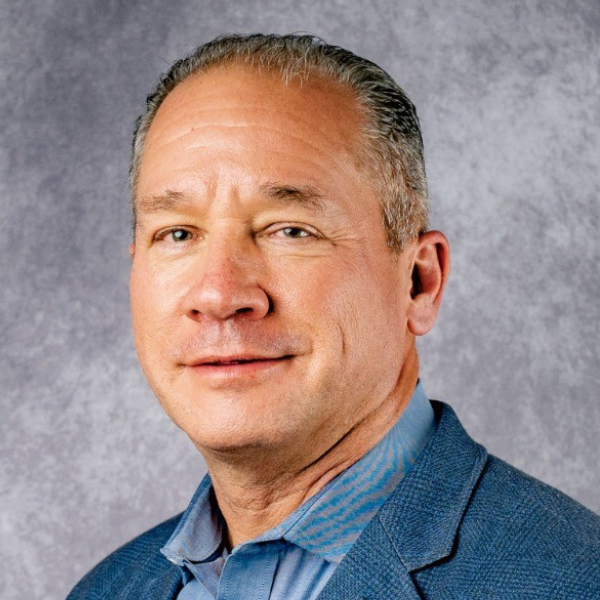
In this episode of The CereCore Podcast, we are joined by James Wellman, VP and CIO at Nathan Littauer Hospital and Nursing Home in Gloversville, New York. A certified healthcare CIO with more than three decades of experience, James has led technology transformations at organizations ranging from large academic medical centers to rural critical access hospitals. He’s also a senior partner at Fortium Partners and an active mentor in the TechLX leadership development program.
.png)
James shares a candid, grounded perspective on what it actually takes to modernize IT in a resource-constrained rural setting, from cloud migration strategy and a pragmatic four-pillar approach to AI, to why the best thing that ever happened to his career was not getting a job he wanted. This episode is for any healthcare IT leader who wants to think more clearly, lead more effectively, and build teams that outlast them.
Key topics include:
Connect with James Wellman, VP & CIO at Nathan Littauer Hospital and Nursing Home.
Phil Sobol:
Welcome to the CereCore Podcast, where we focus on the intersection of healthcare and IT, from practical conversations to strategic thought leadership. Let's unpack the decisions, challenges, and journey of those whose purpose it is to deliver technology that improves healthcare in their communities. Today we are pleased to welcome to the CereCore podcast James Wellman. James is vice-president and chief information officer at Nathan Littauer Hospital and Nursing Home in Gloversville, New York. A CHIME certified healthcare CIO with more than three decades of experience, he has led major technology transformations across health systems of all types, from large academic medical centers, to critical access hospitals, and served in the US Army before beginning his career in healthcare IT. He also is a CIO senior partner at Fortium Partners, and an active mentor in the Tech LX leadership development program. At Nathan Littauer, he's known for bringing a sharp external perspective, and a practical outcomes first approach to technology, the kind that closes gaps teams don't even know they have. James, welcome to the CereCore Podcast.
James Wellman:
Thanks for having me. It's great to be here.
Phil Sobol:
Well, we're thrilled to have you, and you've really had an interesting path career wise to where you are today, US Army, hands-on IT work, and now CIO. Was healthcare always the plan? Did you stumble into it? And were there any pivotal moments that made you say, "You know what, this is where I belong?"
James Wellman:
It ended up being a happy accident. My career path was law enforcement, or so I thought. I was a military police for the US Army, and when I ended my tour, I was doing some deputy sheriff work, and I thought I was applying for different police systems around the country, actually in the Southeast, where I had either some contacts, family, friends, those type of things. And I had a bit of an introduction to the US Marshals that I'd worked with them in the US Army, and I was talking to my father while I was applying for the Kentucky State Police, and he said, "Well, that's a great career. Is that your ultimate?" And I said, "No, I think it's the Marshals." And he asked me why I didn't do that first. And I said, "Well, I need more military time, more police time, or I need to finish my degree." And there the decision was made, I would go back to school and finish my degree.
Phil Sobol:
Got it.
James Wellman:
And I ended up taking a part-time job in the IT department again, because of a mandatory IT class, a computer science class that I had to take.
Phil Sobol:
Wow. Oh, that's fascinating. Ultimately, how did you make your way then into healthcare?
James Wellman:
I started out at the University of Kentucky Medical Center, and again, through a lot of things, connections, my mother worked there as a director of finance for the College of Medicine, and I commented I was working at sports medicine, and that really spoke to me. I enjoyed that. I met the IT director who overheard me talking to somebody complaining about waiting for terminal time, because I was older, but I was taking a freshman level class, so I had to sit behind people and wait for hours sometimes. And if I didn't get my coding right, I'd have to go and get back in line and start over.
And he commented, he asked if my mother, "Is that your mom?" And I said, "Yeah." And he said, "Well, tell you what, come with me. I can get you on the system, and you can get your stuff done. Have you got your books?" And I said, "I do." And he got me connected to the system. I said, "This is great." And he said, "Well, if you want to come over and answer the phones, you can do that." And I said, "That'd be fantastic." I met the team. They kept showing me different things to do. We were working on a Wang VS300, some pretty old level computing there.
Phil Sobol:
Wow, yes, yes.
James Wellman:
And I said, "Sure." And the next thing you know, he came in and said, "Well, I heard you're doing a lot more than just answering the phones." And then, he said, "I'll pay you a dollar more than they're paying you to work in sports medicine." I said, "Why not?"
Phil Sobol:
Perfect.
James Wellman:
I joined the IT department. About six months after that, he left. New person came in. She was a really fantastic director, and she said, "I need you full-time." And I started full-time with them, and I kept progressing, and moving up. The person who was teaching me became my first supervisor. Then, he didn't like being a supervisor, and I ended up becoming his about a year and a half later, and I just kept working my way up.
Phil Sobol:
Oh, that's excellent. Yeah, people leadership is not for everyone, and I think sometimes it takes people longer sometimes to figure that out. But, no, that's excellent. Well, certainly, thank you for your military service. I'm always keenly interested when I talk to people that have that military background, just to understand were there any specific skills or lessons from your time in the Army as military police that really stayed with you, and maybe helped shape how you approached a civilian job?
James Wellman:
I always approached this a little interesting, because I did not make a career out of the military, and when I went in, I went in for three years-
Phil Sobol:
Right.
James Wellman:
... and got in, got good some of my time, enjoyed it, wasn't quite sure if I was going to do, but went ahead, and decided to get out, and pursue the civilian aspect of law enforcement. For me, I had been a very young NCO without the benefit of all the schools that they give the NCOs. It's a non-commissioned officer.
Phil Sobol:
Right, right.
James Wellman:
I was actually a corporal, and that one's challenging. You take some good things from there, and I took some bad things from there. In the military, you're not questioned. You're told, "I need you to go do this, do this, do this, do it now." And you do those things without question, and that's taught to you, because questioning things is what gets people hurt, and what makes you lose the mission. That part stuck with me, honestly, probably a little bit later in my career in a bad way. And the good things that came out of it was an ability to overcome problems and challenges. That really showed me everything was mental. They always talked about that your mind gives out before your body does.
Phil Sobol:
Yes.
James Wellman:
But, I also thought the same thing applied to everyday problems, and I still treat it that way. I take a step back, maybe give my mind a bit of a break, and reapproach things from a different angle, and that is interesting. I have so many good friends who were in much longer, and had the benefit of a lot of the education, and they brought from that much stronger leadership skills than I actually did. That hampered me in a way, which ended up being a very pivotal part of my career a little bit later.
Phil Sobol:
Oh, excellent. No, I appreciate you sharing that. You've been now a CIO, right, across different types of organizations, large academic medical centers, public hospital, and now rural community hospital, and nursing home. How have those differences in where you've been shaped your leadership approach, and then, possibly the IT strategy that you employ?
James Wellman:
When I was at an academic medical center, I wasn't the CIO. My mentor was the CIO there, and they're pretty much in-
Phil Sobol:
They gave you a promotion.
James Wellman:
... your swim lane. You are told this is ... Literally, I was told this one time, "This is the pot you're planted in. This is where you need to grow." And I was interested. I was trying to figure out how we would apply IT to different aspects of the health system, and you would see that, but you wouldn't see it directly. People would come to me with problems, we would work with them to provide solutions. I was technology based. We were building a brand new 500 bed hospital at the University of Kentucky. I was overseeing the technology for that. We just opened our new ED, and it was a great time. It was exciting, and I was learning quite a bit. And then, at the urging of my mentor, I applied for some jobs in the CIO, and I ended up in a regional health system with a small hospital system that we ultimately closed in Oklahoma. And that was pretty interesting, because I showed up there via McKesson-
Phil Sobol:
Oh, yes.
James Wellman:
... and I was an outsourced CIO to them. I'd had 11 predecessors in 10 years, and that was a very interesting situation to walk into. And very quickly, the thing that I learned was when you're in that region, you're taking care of a little bit of everything, and that really shaped me in a way that I thought has helped me out tremendously in my career. It gave me much more insight. I was much more personal. You're becoming an administrator for everything. I was the IT guy, and that role grew quite a bit while I was there. But, you're also taking care of things that are happening and what goes bump in the night when you're the administrator on call.
And other duties as assigned are a very real thing that you do. In that particular cases, and in other places, I've taken on a lot of operational work, and that grew. Again, I always take that back, and how does that apply to what I'm doing in IT? IT is still job number one for me. I feel very comfortable in the operations role, but I love doing the IT aspect, and I think they're blending quite a bit. It's not uncommon to see a lot of CIOs doing operational work.
Phil Sobol:
Yes. Yeah, I think that blending is happening more and more and more. Oh, that's excellent. There's been a transition that started happening really over the last number of years, and that's the move out of the local data center footprint. And I know that you've been instrumental in doing that, in fact, reducing ... I don't want to get the percentage wrong, but it was a pretty substantial percentage of a local hospital IT data center footprint, which is a significant transformation. What did that process teach you about what actually works in that, versus what just sounds good on paper, right? Hey, let's get to the cloud.
James Wellman:
And I look back at this, and I think it's ... I laugh at it now. In the mid 2000s, around 2014, 2013, I was really pushing to transition a lot to the cloud. I was a little early for most people-
Phil Sobol:
Yeah, yeah.
James Wellman:
... and my goal was actually very structured, because we lived in Tornado Alley in Southwest Oklahoma.
Phil Sobol:
Mm-hmm, yes.
James Wellman:
We were there. I had just moved to Oklahoma when Joplin, Missouri had been hit, and they took a tremendous toll on the health system there. I lived in Oklahoma when more medical was essentially destroyed.
Phil Sobol:
Right.
James Wellman:
That was very bad. We did not have the ability to set up the redundancy of multiple data centers all over. We had some things in an F5-proof bunker, which is a very interesting, but now you're back to communications. Now I had to maintain the physical aspect, the communications aspect. And from what we discovered, it's far easier to return communications. We could set up satellite communications. Granted, we weren't using Starlink back then, but it was actually satellites on an 18 wheeler as part of our disaster recovery would wheel in. We had multiple demarcation points around the building that they could hook into, and we could start stringing together the network. And if we had to, we would make different connections within the building as needed.
And we took practical experience from that, and I said, "So it's far easier to do this than it is to build multiple data centers." And so, that led us towards the cloud, and we just saw the vision of where things were going in that regard, backups, day-to-day, and the reality of what we were doing then. Our first cloud foray was with Google at that time, and we were like, "They're spending more in a week, probably in a day-
Phil Sobol:
Right.
James Wellman:
... possibly in a year in cybersecurity." They were approaching that, and giving us a much more robust platform. That's stuck with me, and it's something that I've been able to do, and it's also we avoid the huge capital outlay.
Phil Sobol:
Right.
James Wellman:
I like to be more of an OpEx than a CapEx type of person. They're always going to have the CapEx there, but I like to control it, and rebuilding my EHR footprint, and replacing 150 servers every five years is not a particularly fun endeavor, and we've done that, and granted, the physical designs of the servers and things have made that significantly simpler to do and achieve.
Phil Sobol:
Right.
James Wellman:
But, it's still a pretty hefty outlay of capital.
Phil Sobol:
It is.
James Wellman:
And we're competing against a new MRI, or a new CT scanner, and the things that also make a difference. That was predictable cost, and that is an earmark of I like to call myself an operational CIO, because I want to know what IT costs.
Phil Sobol:
Right.
James Wellman:
What's it cost to fund me? I don't want to be the black hole. I think we chases us in IT, but that's really, really important to me. And we're doing the exact same thing here, and we're pretty excited about some Meditech work that we're doing with Meditech and GCP and Google to transition to GCP now.
Phil Sobol:
Absolutely. No, that's great. We can't have one of these podcasts in today's day and age without talking about AI. In the context of that, what do you see as the real opportunity today for hospitals and health systems versus what's just noise right now?
James Wellman:
Well, the obvious one that's, and I think the easiest one that everybody's doing is Ambient.ai. It's pretty well-vetted. It's easy to ... I wouldn't say it's easy to do, but it is a easier one to put numbers around, and show real results. We're pursuing that, and we purposely waited until '26 to start with some AI initiatives. They had tried one before I arrived here in '23, but it felt more like an answer in search of a question when I was asking everybody like, "Well, what were you trying to solve?" We stopped at this, and part of that was to also people get excited. Well, we're going to use AI, and I hear that a lot, and I'm like, "For what?" We approached this one a little bit more pragmatically, and we call it our four pillar approach, and we looked at the basic needs of this organization, and how can we use, or could we use AI to offset that?
And we've gone with an Agentic AI agent, which we've now deployed, and we're in the middle of deploying, that does the first call and answering the goal is to have it take the bulk of calls, be able to do reschedules, information, and it's working very well. We like that. Our goal is to have that completed by the end of this year. We are rolling out Ambient in a two platforms. We're doing both the ED and hospitalist in one methodology. It's a little different there. And then, with our ambulatory, we're doing a separate one.
We built in search and summarization into that to help with chart prep. That can also help ingest a lot of data externally. As a small rural health facility, we send a lot of people out, maybe for oncology, more complex cardiology, and then, we bring our families back here. We want to ingest 600 pages of documents. Before I arrived here, they were just directly scanning all those into our EHR, which is never a good idea.
This gives the providers an easy way to do good summaries, get the pertinent data that they need, reference it should we have to go back later, and pick that up. And then, one we're very excited about, we're just on the final stages, and we're getting ready to sign, is around our RCM. And we are going with an AI company, and outsourcing our RCM with them. And the goal is to track the patient from registration, to final payment, and outcomes. We've got some irons in the fire with a couple other AI companies to start tracking how do we do from a clinical perspective? That's had a lot of very good insight. We're seeing avoidable issues that we're getting ahead of. That's been very, very big. And that's just our organization. Obviously, your mileage may vary a little bit depending on your organization. We didn't have a centralized call center.
Each clinic was working independently. It wasn't cohesive, so that was a problem. There was an AI solution that's helping us solve that, combined with a physical build out of a centralized call center location. We still have people on the back end, and we approached AI as a tool set. It's not a replacement. We're not getting rid of people. We're augmenting the people that we have.
Phil Sobol:
Yeah. No, that's excellent. And I think the approach is spot on, right? And I love the comment that you made just about, "Hey, this is what the need is for our organization. And now, we're leveraging the appropriate tools to align with the need," versus the earlier approach, right, which is, hey, we're going to do AI. Okay, great, why?
James Wellman:
And I've seen that, and I've struggled that a bit. Sometimes consulting people are like, "Well, we want to start some AI projects." And I'm like, "For what?"
Phil Sobol:
Why?
James Wellman:
Yeah. Figure out what the problem is first, then we'll tell you if AI might be a solution for you.
Phil Sobol:
No, that's excellent. That's excellent. We've talked to a number of organizations that are particularly in the rural space, and they all at some point mention the challenges, right, razor-thin margins, workforce shortages, in some instances, aging infrastructure, et cetera. For you all, where are you seeing technology outside of what we just talked about from an AI perspective, truly making a meaningful difference for the organization versus just incremental improvement?
James Wellman:
I think you have to look beyond just the IT. When you're talking technology in a clinical setting, it can't be just switches and computers. You have to look beyond robotics, automation, and the different things that we have. You can not hire new providers. It's just really tough to hire a new surgeon without a robot.
Phil Sobol:
Yeah.
James Wellman:
We have a team actually going next week to work on that problem that we have. We have an excellent group of surgeons who are the old school surgeons. And I'm impressed that they remind me of the people I worked with when I started my career. These are highly skilled individuals, but they're not going to be with us in the future. They're aging out, they're ready to retire, and we have to replace them, and that's a struggle. I think your technology has to go around. But, to make that there, you're back to, you do need that basic infrastructure has to be in place. That's the thing where health systems struggle. That will make your cybersecurity harder, that puts you at risk, because it's very easy to get stuck in a mindset of, well, it works, so we'll just leave it alone, right? Well, yeah, but the switch is eight years old, and I can't update it any more, and now, it's at risk, or the computers won't run Windows 11, and I can't update them anymore.
There's rural health exemptions, but we've got to get out of that mindset, so we are ... And we're fortunate enough that we still have money in the bank. We're changing our mindset, and the one that's called, it's an abundance mindset. We have the money, we're going to invest in our future, and we're investing in the technology, and to make sure that we are here, because without that, and if you don't invest in it, just like if you don't invest in your physical infrastructure, and your buildings, and your generators, and your power, you'll cease to exist.
And I think if you go all the way back to your foundational operational output, do the thing that you're really good at, take care of the families who are close to you, keep them here next to their support network, use technology to bring in, and keep higher acuity patients in your facility. We're working with a larger health system, and a very good relationship who's giving us that ability. Higher acuity patients in our inpatient setting, close to their family and friends, and that's been a huge influence for us. We're going to continue that, because that keeps people happier.
Phil Sobol:
No, that's excellent. And I think you did a great job of explaining that it's not just IT anymore, right? It's not just the switches, it's not just the network, but IT truly touches everything operationally inside of the organization now, and supports it as well. And you mentioned that you've got some older surgeons, and then, you've got the newer crowd that think a little bit differently, and how the same applies to CIOs, right? We do have CIOs in our environment and ecosystem that think old school. Do you have any words of wisdom for how a CIO should be thinking about this new paradigm from a strategy standpoint? Because it isn't just the IT shop any longer, it truly is an organizational approach.
James Wellman:
I think one thing that crosses over, and especially, with my experience with, like I say, very large health systems down to very small ones, you must understand the business of healthcare as a CIO. We talked about that a lot. When I first was starting this journey, I could have chosen other IT related roles and industries. But, I liked healthcare, and that spoke to me. I felt so much more invested when I took the time to learn the operations, and see how we made a difference. And you go back to really basic, lean gembas getting out, seeing how things work, finding that is like, oh, that really is dumb.
I wish I'd come up with this, but I think with the health system of Hawaii called it GROSS, get rid of stupid stuff. And that was one of the things that I seen. I wish I give them the proper ... I'd love to take credit for that one, but give them the proper recognition, but that stuck with me. And so, I use that all the time, and I hear things we're done with. And we go, "Well, why are we doing that?" And no one can tell me why. Is this something that carried over from 12 years ago? I'm like, "Well, stop it. Just stop. We don't have to do that anymore." And that is really important, so we have our people out walking around.
Phil Sobol:
That's excellent.
James Wellman:
We have our techs out getting involved, and that's something that I started years ago. I was like, "Go out there and be there. Be in surgery. Be there when surgeries are starting at 6:00 A.M." We have technicians there, because there's a lot of IT in the surgery department. I was like, "That helps."
Phil Sobol:
Absolutely.
James Wellman:
Walk around to the offices, go to registration, see how they're doing, make sure that things are set up correctly. Something as small as, are the printers in the right location? Are they the right printers? Do the scanners work?
Phil Sobol:
That's right.
James Wellman:
And they see you. Our techs are the face of our organization, and in many organizations, depending on how you answer the help desk, they're the voice. And I'm a little biased, because I was a tech, and I started out four years ago, and that stuck with me a long time. And I tell everybody that. I said, "If you want my job, I want you to have my job."
Phil Sobol:
That's excellent.
James Wellman:
Come to me, and we'll talk about it, and we'll set you on that pathway.
Phil Sobol:
Yeah. Well, that's fantastic. I think you've definitely had that level of influence in setting the direction there. And I think, sometimes, organizations have a challenge when it comes to not having a lens outside of the organization. I know with your involvement from a Fortium standpoint, you've had some of that kind of external influence, and even external outside of the healthcare space where you're seeing things that a lot of CIOs that have only been in the hospital haven't seen. And so, what does that outside perspective teach you that you can bring back to your organization?
James Wellman:
We talked about, and we hire people from all industries. You don't have to be a healthcare person to come and work for us in our IT shop. We'll teach you the healthcare aspect of that. We're very big on that, and we drive that home. That was driven home to me personally, so we talk about that. I think one of the things I've seen is sometimes we can't get up out our own way. We get stuck. And I've also noticed, and this is from my experiences again, everybody's going to be a little different here. When I've talked at other organizations, I've seen smaller organizations and rural organizations have a tendency to have a lot more homegrown people. I really encourage them to get out there, go to HEMS, go to CHIME, get involved, go talk to your peers, share with them. When I started making those relationships, again, the world opened up a lot more. Suddenly I had a sounding board and I was a sounding board.
Phil Sobol:
Yes.
James Wellman:
Fun when you have somebody who's calling you from a major health system. Some of them, I have some friends, and I would consider probably in the top three or four health systems in the country, are calling me going, "I got a problem." And I always laugh, and I sit on stage with some pretty big names at times. I said, "Well, I figured I can hold my own here." But, you've got to get out and take from that from industry." I also got into a bit of thing that was pretty fun called ORBIEs when I was in Ohio, and that was really enlightening to me, because I had firsthand experience with CIOs in a lot of other industries. And the things we were able to take back and forth. Similarities and disparities there were pretty interesting, how much I shared, we shared with banking, the 24/7 aspect, the control, those were all really interesting to me, and we were able to learn, seeing things at automobile manufacturing.
I remember taking that to University of Kentucky who reintroduced robotics back in the early 2000s, start delivering all of our labs samples, things going back and forth. We took that from automotive industry at Toyota. I think you get out there and you can see things, how does that apply to me? And plus it's kind of rewarding when people call you up and go, "How are you fixing this?" And you have to think about your answers sometimes and do that. I just think you get out there, and you see more things, and it's okay to expose yourself to something different-
Phil Sobol:
Agreed.
James Wellman:
... and you have to get your team out there too. That's incredibly important. You can't sequester yourself away, and think you know all the answers, because you're going to get overrun quickly.
Phil Sobol:
Well, I had the privilege of having one of your colleagues, Dr. Roy, on the podcast a little while back, and he definitely credited you with bringing that external perspective to the organization. And I think he credited you of saying something along the lines of, "Hey, organization, you're doing well, but you could be doing a lot better."
James Wellman:
Yeah.
Phil Sobol:
I guess, that brings up, "Hey, when you walked in the door, what were some of those things that you thought, okay, yep, right off the bat, I think we can do better here, we can do better here." And just what was that journey like in working through those items organizationally?
James Wellman:
You mentioned Dr. Roy, he's absolutely fantastic.
Phil Sobol:
I'm actually sitting here looking at his book right now.
James Wellman:
Yeah, he went here as a ... He was a hospitalist for our outsource service, so he joined the week before I did as our new CMO, CMIO. He is very much up with technology, he's forward-thinking, so that made that part easy. There's times where I'm having to overcome biases because they're like, "That's not how we do it. " And I'm like, "Well, I know that." And I'm very conscientious about, I'm not clinical, so I don't tell providers how to treat people, how they ever do that. But, he made that a lot simpler for me.
But, the one thing that I talk about all the time is I don't come into an organization first thing and say, "This is what we're going to change." I've never done that, because I don't know the organization. I've heard, and I've gone through an interview process, and I've talked to people, and I'm hearing a level of problems, but I need to go out and see them.
Phil Sobol:
Yes.
James Wellman:
And I talk about that. My first 100 days, and those when I'm doing that, I'm out just talking to people, and sitting down, and writing lists, and witnessing things. And some of the things I'm figuring out, I'm like, "This was terrible, and I was told all these." And I go, I'm like, "When did that happen?" "Well, that's five years ago." Like well, is it happening now?" "No." "Well, then don't worry about it." We sat around and said, "What are the challenges and did we standardize? Did we clean things up?" And we were very, very customized here-
Phil Sobol:
Right.
James Wellman:
... because everybody thought they were special, and sometimes you're bursting that bubble, and I'm like, "We're not special. We're a good rural health organization, but the standards are there for a reason. Let's adhere to those, and try to make this workflow a little bit better and track that."
Phil Sobol:
Yeah.
James Wellman:
And that was how we approached this. But, I had a champion. When I had worked with Dr. Roy, he's very, as you reference his book there, he approaches this thing from the heart, and that's how he is with everything. And so, I approached him that way as well, and we started going to some events together. I've got him out doing different things and that was one of the things that I said, "You need to get out there." And so, as evidenced by the podcast you did with him, he's doing that, and excelling at it, and we're doing some pretty fun things here. But, again, I always caution people, you'll alienate yourself as a new CIO.
If you walk in, and say, "I'm here to fix everything," you don't know what the problems are, and you just insulted a whole lot of good people.
Phil Sobol:
Right.
James Wellman:
... and that's something you can ... It's easily avoidable. Don't do that. Go and listen first. Then, seek to understand. We hear that all the time, but actually practice it. That's not a good way to get your start out. And again, I've learned that through the life of hard knocks of not doing that sometimes.
Phil Sobol:
No, excellent guidance. At CereCore, we've had the privilege to come alongside you, and really help, in some small ways, you in your journey, and some of the key projects. And a number of our team members who work behind the scenes listen to this. What would you want them to know about how their work impacts patients, clinicians, and your organization?
James Wellman:
This is something I tell everybody where we talked about sometimes we hire outside, that you truly do make a difference. You're not there, and I'm not. I'm not in the room treating that patient, but the systems that we put in place save lives. And I truly have seen that firsthand through very personal events that changed me, and I think that's the thing that we take home. The work that you're doing could impact somebody you care about, could impact yourself, and it's really there. It truly does take a village. The providers can do certain things to a specific limit, but they need that information. They need that data. They need all of that quickly and efficiently to make the best judgment and treat that patient in those urgent situations, or in long-term situations when they're trying to figure out. And I think that's really important.
Sometimes people can get lost, and feel like they're part of the masses, and they're not being heard or seen. And I've been there, and I've felt that. But, I think it's important when leadership shows them is you do make a difference. And that's one of the things that we do, and that was one of the reasons when we ended up working with CereCore on the very first engagement where we went to an outsource provider after I arrived, and that was part of it, because they came in and saw how they could make a difference, and helped us with some basic assessments that truly sped up things, changed lives, and in my opinion, saved lives.
Phil Sobol:
Well, that's excellent. You've mentioned having the opportunity to be on stage, build a lot of rapport with other CIOs. I know you're an active member of the TechLX program, one of the top IT leadership development programs in the country. You've had the opportunity to mentor. And what's that on piece of advice that you find yourself giving over and over and over again to the next generation of IT leadership out there?
James Wellman:
I approach this from a humility standpoint, and I'm very honest that when I want to do this, you want to find people who want to make that difference from a leadership perspective, and some people don't know how that's going to impact them, and truly, you give up certain skills. I can promise you you don't want me working on your network switches anymore. I used to be pretty good at it a long time ago.
But, those skills have atrophied, but I feel like I make a bigger impact on that. I like to humanize this. I think [inaudible 00:38:18] does a fantastic job, and you get people who may be have stalled in their career, or people who are trying to make that transition, and jump into their career. And so, you want to learn the person, and what they're like, and what they are. And I tell them, I'm very brutally honest where I tell people, I was a terrible manager. I was awful. You would not have wanted to work for me.
Thankfully, I had a wonderful mentor, and my CIO, who helped me out tremendously, and I didn't get a job. The best thing that ever happened to me is I didn't get a job, and he told me why I didn't get the job. And when I went and looked at that, and he let me go through all my grief, rage, I went through it all, acceptance, and I came back to that, and I was like, "Wow."
And I said, "That's what people think of me," and that bothered me. Their perception was my reality, and that was hindering me as a person and in my career. And I looked at myself, and said, "I don't like myself as a manager. I'm not very good." And that was a really hard, hard thing to do, and a hard reality. I'm never making light of addiction or anything, but with anything of that nature, if you can't admit the honest truth to yourself, you're not going to get better.
And so, I looked at that, and I wasn't very good, and the 360 review I did with my team at the time at University of Kentucky proved that point to me. It was anonymous, and it was brutal. But, I wanted to change it because I knew that's not who I was. And I go back to that conversation about the military. I could order these really highly intelligent people around without a conversation about why we're doing this, or getting their opinion, and hearing that. And I changed that. That has done more for me, and that's the thing, just be honest with yourself, do you like you? Would you want to work for yourself?
And I ask people that all the time. And I think about how I treat people, and how I'm treated, and I stop and reflect that, and make sure I don't slip back into bad habits. That was very active when I first started doing it. I fortunately don't have to, it's become ingrained in me not to do those things now after all these years. As I say, I'm in the back nine of my career that I think I figured that part out.
Phil Sobol:
Yes. No, that's excellent, excellent advice. And certainly that mentoring up that next generation is absolutely critical, and that's great advice. And yes, I would encourage anyone who's wanting to go through that leadership tract to go through that 360 process, because as painful as it is, it's also revolutionary when it comes to personal development.
James Wellman:
Well, it is. Same organizational leaders who were not recommending me for that job, six months later, were recommending me for the Future Leaders of the Hospital Mentoring Program.
Phil Sobol:
That's right, that's right.
James Wellman:
The perceptions changed, and it changed my professional career, and opened doors that otherwise I would have plateaued, and that would have been it. And I definitely wouldn't be as mentally happy as I am right now.
Phil Sobol:
Exactly. Oh, no, that's excellent. That's excellent. Well, James, we always wrap the podcast with just an open call for any last words of wisdom that we didn't get to in our conversation that you want to get off your chest to our listening audience.
James Wellman:
No, I think we go back and we talk about the mentoring. To me, that's been a very important aspect. And while I do mentor on a professional level, I think it's really important for us as leaders to do that within our organization as well. I think some of the things that I'm most proud of are, so many people I've worked with over the years, again, telling them through my professional and personal experiences have gone on, and completed degrees, and advanced their careers, and doing that, and giving them opportunities. I'm a standing rule that if you're working on my team, and you get an opportunity to get a better role somewhere else, come to me. I will personally write the letter, I will reach out to that leadership, and tell them how good you are. I don't look at that as they're leaving me, or that I've done something, and now they're deserting me.
It's an opportunity to get better, and it's an opportunity to pass that on. I think that is so important, and I will live and die by that. I think we have to promote people, and let everybody have a chance to move on if that's what they want. I also tell people, I warn them that people don't want to be the managers. The smartest IT guy I ever knew in my life, and I watch people with CCIEs and every other amazing-
Phil Sobol:
Mm-hmm, yes.
James Wellman:
... the letters behind their name will come to him and ask him questions, and he was instrumental in me, and he was literally the person who first taught me, and helped me, and mentor me in IT when I first started. It was just became my friend, and he used to tease me because he's like, "Well, I was your boss, then you were my peer, then you were my boss, you're my boss's boss, you're my boss's boss's boss, you're my boss's boss's boss's boss." We maintained that close relationship. Unfortunately, he passed away recently, but he was great. He was really good at what he did, so paid him fairly, and he did a fantastic job. He just didn't want to manage.
Phil Sobol:
Absolutely.
James Wellman:
And so, I think recognize your people and feed and water that.
Phil Sobol:
Yeah. That's the hardest thing I think that we see organizations struggle with sometimes is, the way they're structured, is they have that one path, right? If you want to grow, it's people leadership, and instead of having the two paths, which one is people leadership, and one is professional development as an individual contributor. And both are absolutely critical.
James Wellman:
Yeah, because there's somebody got to be there to do that level of high end work that you can rely on, and call, and those are my go to people, and we know that, and we talk about that, and I always say, "No one works for me. We all work together." And I think that's important, and we teach all those aspects, and we talk about all those aspects. A young man who did not have a degree was really smart that I met in Oklahoma is now my number two here at New York with a master's degree, and he is probably one of the smartest IT people I've ever met in my career, and I've been working ... He was two years old when I started my career, and I think that speaks well. And like I said, those come back. We just kept in touch all those years, and I reached out to him and said, "I need somebody here." And he moved halfway across the country for it.
Phil Sobol:
Excellent.
James Wellman:
If I left tomorrow, they wouldn't even blink. Dr. Roy would tell the same thing. He'd be the CIO about an hour after I walked out the door.
Phil Sobol:
Yes, yes.
James Wellman:
But, people are great. You just got to work with those things and find the way that makes them happy and makes them perform.
Phil Sobol:
Indeed. Well, James, thank you so much for coming on today, for sharing your insights with us. It's been a fantastic conversation.
James Wellman:
Yep, love it. Love working with CereCore. We've had a great relationship.
Phil Sobol:
Wonderful. Well, thank you. Thanks for listening to the CereCore Podcast. We hope you enjoyed this conversation. Follow us on your favorite podcast platform for more episodes. Connect with us on LinkedIn. Visit our US website at cerecore.net and for those abroad, visit cerecoreinternational.net. Learn more about our services and find resources. At CereCore, we are healthcare operators at heart, and know the difference that the right IT partner can make in delivering quality patient care 24/7. Let's help make IT better. Here's to the journey.
Hector Rodriguez brings a different kind of resume to healthcare IT leadership. Before joining Humboldt Park Health as Vice President of IT in 2022,…
What does healthcare leadership look like when you never forget there's a human on the other side of every interaction? In this episode of The…
In this episode of The CereCore Podcast, we are joined byJames Wellman, VP and CIO at Nathan Littauer Hospital and Nursing Home in Gloversville, New…
Let us know how we can support your initiatives and take some of the heavy lifting from healthcare IT.