Aug 28, 2026
Hector Rodriguez brings a different kind of resume to healthcare IT leadership. Before joining Humboldt Park Health as Vice President of IT in 2022,…



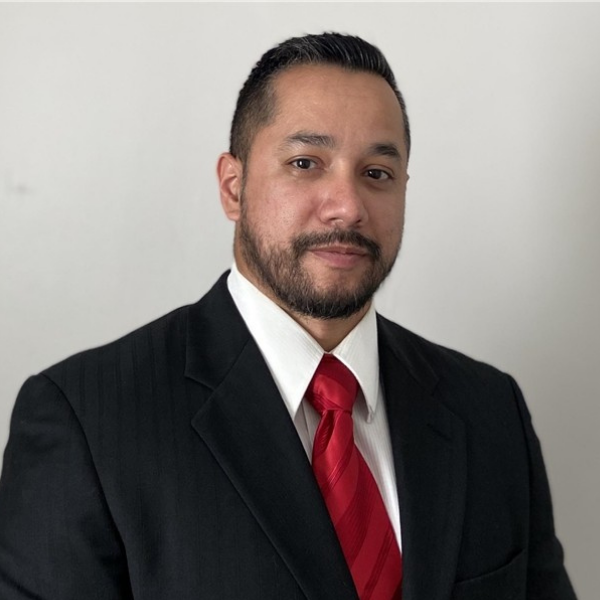
Vice President of IT, Humboldt Park Health
Hector Rodriguez brings a different kind of resume to healthcare IT leadership. Before joining Humboldt Park Health as Vice President of IT in 2022, he worked across managed services, city government, and nonprofit organizations, exposure that shaped how he approaches technology decisions today. In this episode of The CereCore Podcast, we talk with Hector about that path, why he treats every technology decision as if a family member were the patient on the other end of it, and what drew him specifically to a safety net hospital on Chicago's west side.
.png)
Hector talks about the role IT played in helping Humboldt Park Health earn a Joint Commission health equity certification, why he's steering his team toward practical, problem-first AI, and why he believes EHR optimization is never truly finished. He also shares what he looks for in a technology partner and how he leads with relentless prioritization when there's never enough time, budget, or people to do everything.
Host:
Welcome to the CereCore Podcast, where we focus on the intersection of healthcare and IT. From practical conversations to strategic thought leadership, let's unpack the decisions, challenges and journey of those whose purpose it is to deliver technology that improves healthcare in their communities. Today we are pleased to welcome to the CereCore podcast Hector Rodriguez. Hector is the vice president of IT at Humboldt Park Health, a safety net hospital on Chicago's west side, serving nearly 500,000 residents in one of the city's most underserved communities. In 2024, Humboldt Park Health made history as the first hospital in the Midwest and 13th in the country to earn healthcare equity certification from the Joint Commission, a recognition that reflects the kind of mission driven work that shapes everything they do.
Hector's path to healthcare IT leadership is anything but traditional. He has worked across industries, worn many hats, and carried a breadth of hard won experience into every role he's taken on. He has been at Humboldt Park Health since 2022, and what he has built there since arriving is worth hearing about. Hector, welcome to the CereCore podcast.
Hector Rodriguez:
Thank you. Thank you for having me. Happy to be here. Much appreciated.
Host:
Well, we're excited to have you, and we always start these conversations with a little bit about your journey. Perhaps take us back to the beginning, and then, how did you find your way into healthcare IT? Perhaps, what are some of those experiences across different industries that have taught you that perhaps the more traditional path ... You brought definitely some new perspectives, let's say, than someone that's grown up in the healthcare space their entire career?
Hector Rodriguez:
Yeah, good question. Thank you. Yeah, I'm asked that all the time, but realistically, I actually didn't even start in healthcare. Early in my career, I had the opportunity to definitely work across multiple industries. I've worked in many industries, managed services, even city government at a point, some nonprofit organizations, and then other IT environments. Yeah, so those experiences themselves, sorry, ultimately gave me the exposure to a wide range of tech, if you will.
Host:
Yes.
Hector Rodriguez:
A lot of business challenges, most definitely, and many, many leadership styles. Many. I've learned a lot from many of them, but ultimately what drew me to the healthcare industry was the opportunity to make a direct impact on, I guess, people's lives. I treat everyone here as if my mother or father were here. Yeah, and healthcare IT's pretty tough, from my perspective. It's just not about keeping the wifi on, right?
Host:
Exactly.
Hector Rodriguez:
Keeping systems online, so ultimately, from my perspective, every decision that we make affects a patient, and like I said, I treat it as if my mother or father were a patient here.
Host:
Right.
Hector Rodriguez:
It can also affect many of our front end users, many nurses, clinicians, and then the family experience that you would ultimately have when your loved ones are here. That sense of purpose itself, it's I guess what made me join the healthcare field, and I think that's right for me at this point in my life.
Host:
That's excellent, and appreciate you sharing that. Certainly, it tends to be a common theme, especially for folks that have been in a lot of different other industries and roles. They get to healthcare and they realize that it's just different. Right? It's definitely a mission driven, just a mission driven sort of culture, and it gives you that sense of doing something that's actually meaningful. We talk about that, and perhaps take that, and how did that lead you then to Humboldt Park, and what's it meant for you to work there?
Hector Rodriguez:
Well, I mean, ultimately I'm looking to grow and accept challenges elsewhere. I know that I've looked up Humboldt Park myself. I've actually worked in the area in the past, but really what drew me to this hospital was ultimately its mission and commitment to serving the community. We're definitely big on serving the community. As the, I guess, Chicagoland safety net hospital that we are, I've seen everyone care for everyone who walks in through these doors, right, regardless of their situation and/or circumstances, so it's been incredibly meaningful here, not only working in the department, but working with some of my peers and ultimately having that opportunity to make those technology decisions that definitely support and/or affect patient care, especially for an underserved population.
Host:
Yeah. Well, let's dig into that a little bit, Hector. You talked a lot about the community and service. Obviously, you're over IT, so maybe give our listening audience just kind of a little bit of a glimpse as to, how does IT fit into the support of that mission that Humboldt Park serves?
Hector Rodriguez:
I think, again, from my perspective, I just think IT is just an enabler of the mission itself, so every patient interaction today touches tech in every way, from my perspective, or in some way, in registration, clinical documentation, imaging, lab testing, medication, even billing, sometimes, even billing. Get that bill, but ultimately, our role is to make sure all the technology removes those barriers that sometimes we hear of in the healthcare industry, then, rather than creating those. I'd love to see our nursing staff, our front end users, spending more time caring for our patients here and less time fighting about some of the systems and some of the systems not working, or ... I want to already be proactive in that state. Then, ultimately when we report out to other things, I want that data to be accurate. I want our leadership, our C-level, whatever it is, leadership, our front end users, to have that data readily available. I think it should support equitable care and improve the outcomes of our community or the community we serve. Just my thought.
Host:
That's excellent. When I read your introduction, we touched on Humboldt Park and the Joint Commission Award for Healthcare Equity Certification, which is a significant achievement for your organization. What did it actually take from your IT team to help get the organization there?
Hector Rodriguez:
Oh, yeah. It was a lot of work. A tremendous amount of collaboration across the org, and many leaders who've stepped up, including myself, but from ... Our IT folks listening, I guess from an IT perspective, I guess, focusing on integrity, accessibility, and the reporting of patient demographic and SDOH data, having that, too, readily available. Our team worked closely with clinical folks, a lot of quality folks, and ops teams to ensure that the data being collected can be used to identify those disparities and identify those measurable outcomes, and support that informed decision-making. Yeah, certifications like the one that we received are never, again, from my perspective, never about one department. It's all about bringing all our people together, leadership, front end users, and the tech together, I guess, around that shared goal. Just my thought.
Host:
Oh, that's excellent, and I think it speaks volumes to the organization, the leadership team there, to be able to pull together and do that, for sure, in support of your mission. We love to ask about the future, right? Where are you headed? I'd be remiss if I didn't use-
Hector Rodriguez:
In all different types of directions.
Host:
Those two fantastic letters, AI. Right? When you think about AI and when you think about what it could do for an organization like Humboldt, where are you putting your focus for the future?
Hector Rodriguez:
Everyone says AI. What does it actually really mean? We're trying to take it from a different approach, but I guess ultimately, our goal here is to move to somewhat practical AI that helps our front end users, our staff, work more efficiently. Right now we do have an application in trial in our emergency department that's improving patient experience, so we have that data, too. We're not only looking at the ER, we're looking at other areas such as, well, I think many people are looking at the ambient clinical documentation portion, the patient engagement portion, as well. Then, we do have some folks here that are pretty smart, there. We're looking at some of the operational automation, even when it comes to revenue cycle optimization, and with the help of other folks as well. I guess the key here is, I guess, not adopting the AI for the sake of AI or just saying AI.
Host:
Yes.
Hector Rodriguez:
Yeah. We wanted to really solve a real problem here at HPH, and ultimately improving access to care, and help our teams to make better decisions.
Host:
Agreed.
Hector Rodriguez:
That's my thoughts on that.
Host:
No, it's a great approach, and I think a lot of times you get the new shiny thing and everyone goes, "Ooh, we have to do that," and people jump, and they skip over the very important business case, use case. Yeah, I think now we're beginning to see organizations that may have got a little ahead of themselves begin to circle back to that and say, "Okay, hold on. Yes. Are there practical applications? Yes, but we need a proper business case, and it's got to be supportive of the mission and our clinicians, and ultimately our patients." I think the approach is certainly spot on. You touched on operational things a little bit there, and certainly revenue cycle is one of those areas that organizations are talking about a lot right now, critically important to any hospital. As a safety net organization, I think the stakes are probably even a little higher, so what has your IT team prioritized to improve revenue cycle efficiency and the accuracy of the data coming out of your EHR? In this case, I believe that's Meditech.
Hector Rodriguez:
Yeah, yeah, absolutely. Well, we've been doing our very best and prioritizing that to ensure that the data that we have and that we're sourcing it from and pushing out to our front end users is trustworthy, ultimately. I mean, that's what we're trying or striving to do. We spend a lot of time optimizing our workflows, improving charge capture, enhancing reporting, reducing the manual processes here, but I think overall, I think we've definitely strengthened that collaboration between IT, our finance folks, who are pretty smart as well, and our revenue cycle ops here from IT as well. We're really just focused on improving visibility into those key metrics, so if we have the right information, all our leaders can make those informed decisions a lot more quickly. When we improve that data with the help of some folks, workflow efficiency, as well, from my perspective, I think we create a stronger financial foundation, and again, it's always tied back to supporting patient care.
Host:
Right. No, that's excellent. Well, you've been going through, and you touched on it there a little bit, some kind of deep optimization work within your Meditech Expanse platform across a lot of different areas, right? We touched on revenue cycle, but I believe you've also touched on lab, clinical workflows, data and analytics. What has that work involved, and perhaps where have you seen the biggest difference?
Hector Rodriguez:
When it comes to ...
Host:
That optimization.
Hector Rodriguez:
Optimization?
Host:
Yeah.
Hector Rodriguez:
Okay, in Expanse, right? It's never going to ... People have asked me, "Hey, when is this priority pack going to stop, or when is optimization going to stop?" For me, and what the message is, optimization, it's never a one-time project. It's ongoing, forever. It's an ongoing partnership between IT and ops teams. It's never going to stop. We worked across all types of clinical workflows, lab operations, revenue cycle reporting, inter-op, and even physician documentation. I guess the biggest difference has come from listening to frontline users and making the tech work the way that they actually need and the way that we actually said that we're going to deliver it. We want our front end users or staff to spend less time navigating through systems and more time focusing on the patients that they're serving.
Host:
Yes.
Hector Rodriguez:
I think that's, yeah.
Host:
I think you said that perfectly, and I chuckled when you said it, right? Because, it's a hard thing for people sometimes to wrap their heads around, that optimization is an ongoing forever process. I think when I first got into this business 20 some odd years ago, it was a foreign concept for people, and certainly as the EHR platforms and all have evolved, I think more and more and more organizations are beginning to come to that realization, but you said it very clearly and distinctly. I think it's a message that organizations, when they wrap their head around it and get into that mindset, all of a sudden their productivity and efficiency, just, it goes off the charts.
Hector Rodriguez:
Oh yeah. I've said it more than once. I've delivered it more than once as well.
Host:
Oh, yes. Well, I think you have to, right? Some people don't believe it the first time or the second time or the 12th time you say it.
Hector Rodriguez:
Exactly, exactly.
Host:
Oh, well, you've been thoughtful about partnerships and about what they look like at your organization, and what do you look like? What do you look for, first and foremost, in a technology partner today, and what makes those relationships work for you?
Hector Rodriguez:
Well, I mean, we definitely vet a lot of partners today through cost-saving exercises and things like that, but ultimately the partners that we tend to work with are those who understand our mission when it comes to serving our community. When they communicate transparently is also key, and they're just ultimately invested in our outcome rather than just simply checking the box or completing tasks that we give them. What made the relationship with CereCore very successful is their willingness to function as an extension. They're more like really just part of our team, just an extension of our team. They definitely have the expertise. CereCore folks are very, very flexible, very flexible, and understand the operations within the community and our hospital environment. Yeah, it just fits very, very well. They're good at building trust, accountability, and they share that commitment with us when it comes to patient and patient care. I think it's definitely a win for both.
Host:
Well, appreciate you sharing that, and certainly that is ... I know our people strive to do that day in and day out, so thank you for that. Our team members, other folks that are in IT, in the healthcare space, et cetera, a lot of them work behind the scenes, right?
Hector Rodriguez:
Yes, they do.
Host:
They're not at bedside, so what would you want them to know about how their work impacts patients, clinicians, the impact there at the bedside?
Hector Rodriguez:
Yeah, I would want them to know that their work absolutely, tremendously, definitely matters. It matters on what they do. Right now it's just, whether just building reports, optimizing some of our workflows here, and supporting our apps or applications, troubleshooting issues, all the work that they do definitely affects our front end users and their ability to care for patients, so when they touch on our front end users, it definitely affects them. Most of our folks don't know their names, right? Most patients don't even know their names, but they definitely have an impact. It's definitely felt throughout the day and throughout the organization. Yeah, so it's definitely a team sport, if you will, and you guys definitely deliver on contributing to that patient experience along with us.
Host:
Oh, that's wonderful. For healthcare IT leaders out there that are working, and there's a lot of these, that are working in a resource constrained environment, while at the same time trying to do meaningful work, what advice would you have for them?
Hector Rodriguez:
I've struggled on this in the past, as well. I would just say, don't steer away from your mission, right, and prioritize relentlessly. You'll never have enough time, no matter what. I don't even have enough time. There's not enough time in the day. There's not enough money, budgets, resources to do everything. I would just ultimately focus on those initiatives that either your organization or yourself has created, and create them for the greatest impact of your patients. For us, it's our patients, our front end users, clinicians, physicians, and the entire org. I would continue. I know we do this here. We build on those strong relationships with our operational leaders. We definitely listen to our front line staff, whatever it is, from, I've got passwords, to badging into computers. We remember all that, so tech is definitely a tool, not the goal, from our perspective. We never underestimate the value of our team or the committed team holistically, so yeah, great people together, I guess we all accomplish great things, even on those limited resources.
Host:
That's right. It is possible. It is possible.
Hector Rodriguez:
Oh, yeah. Oh, yeah.
Host:
Oh, that's great. No, that's excellent. Well, I wanted to wrap up our time today, Hector, with maybe just a little bit of, I guess, a lighter question. You talked a lot about ending up in healthcare and being mission driven, and that personal sense of fulfillment, but if you hadn't ended up in healthcare IT, what do you think you'd be doing right now?
Hector Rodriguez:
Honestly, I would probably be still solving problems elsewhere. Maybe not hospital problems, maybe more or less people problems, maybe really staying in the law enforcement side. I can also see myself running other businesses as well, maybe working on some tech consulting in the future, but ...
Host:
There you go.
Hector Rodriguez:
Yeah.
Host:
Excellent.
Hector Rodriguez:
I've always enjoyed bringing people together. An enforcer of the rules. Really good at strategy, but I mean, I know technology very, very well, so probably something in tech.
Host:
Yes. Oh, that's great. Well, wonderful. Well, Hector, thank you very much for taking the time to share your time and your insights on our podcast today. Just, again, thank you for your partnership. I know it's meant a lot to us, meant a lot to our team members, to be able to come alongside you guys as an extension of your team in support of your mission, so thank you.
Hector Rodriguez:
Thank you. It means a lot to us as well, and thank you for having me.
Host:
You're welcome. Thanks for listening to the CereCore podcast. We hope you enjoyed this conversation. Follow us on your favorite podcast platform for more episodes. Connect with us on LinkedIn. Visit our US website at cerecore.net, and for those abroad, visit cerecoreinternational.net. Learn more about our services and find resources. At CereCore, we are healthcare operators at heart, and know the difference that the right IT partner can make in delivering quality patient care 24/7. Let's help make IT better. Here's to the journey.
Hector Rodriguez brings a different kind of resume to healthcare IT leadership. Before joining Humboldt Park Health as Vice President of IT in 2022,…
What does healthcare leadership look like when you never forget there's a human on the other side of every interaction? In this episode of The…
In this episode of The CereCore Podcast, we are joined byJames Wellman, VP and CIO at Nathan Littauer Hospital and Nursing Home in Gloversville, New…
Let us know how we can support your initiatives and take some of the heavy lifting from healthcare IT.