Aug 28, 2026
Hector Rodriguez brings a different kind of resume to healthcare IT leadership. Before joining Humboldt Park Health as Vice President of IT in 2022,…



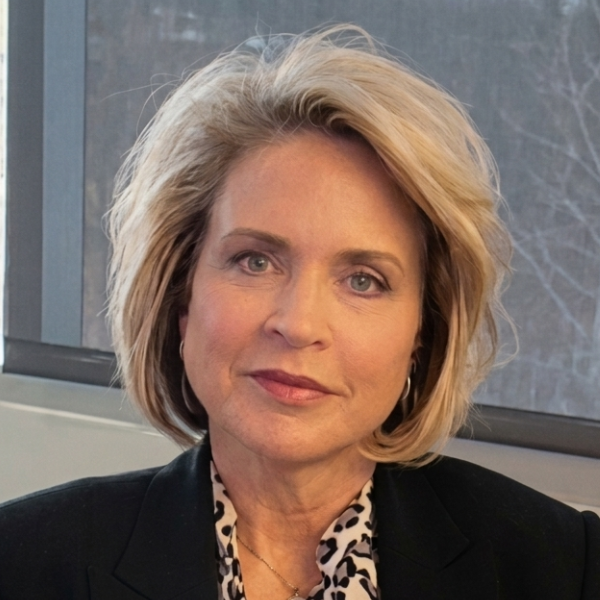
What does it take to manage IT across 13-plus hospitals; rapidly, responsibly, and always with the patient in mind? In this episode of The CereCore Podcast, Tiffany Laurenz, Vice President of IT Delivery Operations at McLaren Health Care, joins us for a candid conversation about the realities of leading a large, complex health system's technology operations.
.png)
From her early days as a billing clerk at a small Michigan software firm to overseeing enterprise IT across one of Michigan's largest integrated health systems, Tiffany brings nearly 24 years of experience, and a deeply practical, people-first perspective, to every challenge McLaren faces. She talks openly about the decision to move toward a hybrid outsourcing model and how a service desk transition she expected to be turbulent became the smoothest change she'd ever seen.
This conversation is for healthcare leaders who want insight on IT governance, the business case for strategic partnerships, and what it means to connect every line of infrastructure work back to the patient.
Key topics include:
Connect with Tiffany Laurenz, Vice President of IT Delivery Operations, McLaren Health Care
Phil Sobol:
Welcome to The CereCore Podcast where we focus on the intersection of healthcare and IT from practical conversations to strategic thought leadership. Let's unpack the decisions, challenges, and journey of those whose purpose it is to deliver technology that improves healthcare in their communities.
Today we are pleased to welcome Tiffany Laurenz to The CereCore Podcast. Tiffany is vice president of IT delivery operations at McLaren Health Care, a large integrated health system in Michigan. With nearly 24 years of experience in healthcare IT, she has served in leadership roles across both provider organizations and global IT service firms. Her career includes 15 years as a client executive at ATOS, leadership positions at Erlanger Health System and now overseeing IT delivery at McLaren. At McLaren, Tiffany leads the execution of major technology initiatives across more than 13 hospitals and numerous outpatient facilities. Her work spans enterprise system implementations, IT service delivery optimization, and ensuring that technology strategy aligns with patient care priorities.
She was recognized as a finalist in The Stevie® Awards for Women in Business for her leadership and operations and resilience. And under her guidance, McLaren has advanced digital transformation efforts such as launching a new HealthLife patient portal. Tiffany, welcome to The CereCore Podcast.
Tiffany Laurenz:
Thanks. Thanks for having me. Happy to be here.
Phil Sobol:
Well, we're thrilled to have you and we always love to start these conversations, just learning a little bit more about your career journey in healthcare IT. We touched on it just briefly in your introduction, but maybe you could dive in a little bit more and really then what ultimately brought you to McLaren.
Tiffany Laurenz:
Sure, absolutely. I kind of stumbled into the world of healthcare IT. I started long, long ago. I worked for a really small software development company, local in Michigan. They were tiny, teeny, tiny. And they developed this physician billing software. And so I started there kind of as a sort of a side job while I was finishing up my degree and I kind of did everything. I ended up doing all kinds of different things there. I went from being a billing clerk because they had a full service billing offering to being a customer support person to testing the application. And eventually I was a trainer and that's where I met McLaren. McLaren was my account that I was responsible for transitioning them over to our physician billing tool. So that's where I met McLaren and then one thing led to another and I ended up working for them and the journey has just kind of gone from there.
Phil Sobol:
Yes. Well, that's excellent. You've got a lot of responsibility there. And so maybe give our audience a little bit of perspective. What does overseeing IT delivery across those 13 plus hospitals and outpatient facilities look like for you on a day-to-day basis? And maybe dive into a little bit, what are some of the unique challenges of supporting such a diverse environment?
Tiffany Laurenz:
I think, well, first and foremost, there's a lot of meetings. We're in a lot of meetings. It is a very large organization and we move rapidly at McLaren. There's no doddling over here. I think your team could probably attest to that from our transition over to you for services. So yeah, it's a lot of meetings. It's a lot of discussion. It's a lot of collaboration. We work very, very tightly with our partner team such as our security team and our applications team, our PMO. All those functions live within the IT department. So that's really nice.
I have a really awesome team. So my team's kind of divided up into two sections. One is the technology side of the house, which is all the different infrastructure teams. So like our network and our wireless and our phones and our data center folks and those folks. And then we have a delivery side, which is our SDM, so our Site Delivery Managers. We have essentially an IT liaison that sits at each of our major hospitals and they're the main point of contact for our executives at the hospitals.
And so they represent they're there to bridge that gap and to make sure that hospitals needs are being heard and being considered and being included when we're doing planning and that sort of thing. So it's interesting. It's a lot of really fast information assimilation and it's learning how to kind of take that technical jargon and be able to kind of relay it back in layman's terms to our customers.
So I'm not technical by training. I don't have a degree in technology. I actually have a degree in business. And so I used to worry about that in terms of leading technical teams. But what I learned is over the years is my strength is building teams. My strength is solving problems. My strength is being able to understand what those technical people are telling me and being able to convey that back to our executives. And that's an art again, I've learned over the years.
Phil Sobol:
It absolutely is. And I think so many organizations struggle with that translation in between IT and then the business and the need and whether it be physicians, whether it be executive leadership, et cetera. And yes, does that take an awful lot of meetings to coordinate and you bet it does, but that's part of that communication that is so critical and important, making sure that everyone's aligned, everyone's on the same page and that nothing's falling through the gaps when it comes to communication so that everybody is aligned and there aren't any miscommunications in and around the direction of the path.
Tiffany Laurenz:
That's very true. Very true. McLaren's grown through acquisition. So every time we grow, that means another hospital or more physician practices coming into the system, which then requires us to go out and figure out how it is we're going to integrate them into our environment safely. These days, security is the top concern and top priority. So we spent a lot of time talking about that world. I'm not sure of the pleasure of the misfortune. Our VP of security left before Christmas of last year and I ended up covering that for about six months and I can't tell you how happy I was when my volunteer term and that role ended because it's a world I would just ... It's a lot and it's scary.
Phil Sobol:
It is.
Tiffany Laurenz:
Especially for health.
Phil Sobol:
The pressure is immense and enormous. And for people that are outside of the industry or even outside of IT from inside the industry perspective, they don't quite comprehend and understand the challenge and the pressure that everyone's under. And yes, I can imagine the relief after that six months was over.
Tiffany Laurenz:
Yes.
Phil Sobol:
You talked a little bit about some of those investments and challenges and I know you guys have been investing a lot in that digital transformation initiatives. We touched on one at the top, the HealthLife patient portal and really some of your IT service modernization. What are some of the biggest drivers that you're seeing for these changes there at McLaren?
Tiffany Laurenz:
Well, patients. Patients are our ultimate customer and they're savvier than ever. They want access. They need access. They deserve access to their medical records. So like you said, we talked about the patient portal earlier. That's huge. It's no longer a nice to have. It's a must have and making sure that's safe is critical to the organization. I partner with my peer, John Tika, who owns applications and my teams provide the infrastructure and the support for the environments that those apps live on. And as we talked about a little bit, cybersecurity, it's a huge, huge driver.
We don't have a conversation today that doesn't include cybersecurity to some degree. Every new application coming in, we're actually going through all of our existing applications. Our new VP of security is doing that and doing risk assessments and we're going back through and making sure even the people we've already partnered with are meeting our standards and our expectations.
So yeah, it's a lot and healthcare is repressed financially more than we ever have been. So figuring out how to do that as affordably as possible. We're very, very, very good at getting the most out of our budget, that's for sure.
Phil Sobol:
It's a challenge and it's an art form. I think that brings up a really good question because you talked about having to apply the security lens to everything and then you've also talked about applying that patient lens to everything. And so perhaps dig into a little bit about how you go about approaching, aligning those IT priorities, including cybersecurity with those patient and patient care goals that you all have organizationally.
Tiffany Laurenz:
What happens is our senior most executives, they go off and do strategic planning a couple times a year and they bring back kind of their vision for the next quarter, year, what have you. And we sit down as an IT leadership team and look at that and figure out what it is, or try to anticipate what the enterprise is going to need from us from IT perspective to support those initiatives. So it's all about driving improvements in patient care. It's about driving revenue. I mean, honestly, people don't like to talk about hospitals and revenue, but it's a reality, right? Hospitals have to make money in order to stay in business to continue providing care. They don't make a lot of money.
Phil Sobol:
Indeed, yes.
Tiffany Laurenz:
But they have to make a little bit of money to be able to continue providing those services to the communities they serve. And as a cost center, because IT's a cost center, right? We're not generating revenue. All the executives are looking at their budgets and they're looking at their IT line item and that number goes up. It almost never goes down. And it's kind of counter to what you would think, right? You think, "Oh, well, we're getting faster. We're getting better. We're getting-" no, I mean yes, but we're also getting much more complicated solutions and tools to things and those cost more and then there's to implement and then they cost more to support day to day.
We're always challenged year over year to keep our budgets flat, which is really, really hard, but I'm really proud that I'm part of a leadership team that has done that for the last five years really consistently to help again support the organization.
Yeah, it's a lot.
Phil Sobol:
It is.
Tiffany Laurenz:
And our environment current, right? Again, from that security lens, as I mentioned, healthcare doesn't have a lot of money. And so what happens is we tend to have our infrastructure get ... We let that age out a little bit more than you see in other industries, right? Banking, they stay really pretty cutting edge with all their stuff. They're on a really short refresh cycle. Healthcare, we don't have that luxury, unfortunately. And so we're always ... Part of our budgets every year is just to go through and be refreshing those oldest, most vulnerable systems and retiring out of our system and ensuring that, for example, our wireless infrastructure has got enough capacity to be able to support the growing demand on it. More and more and more things are wireless, right? Every new technology that comes in the hospital has some wireless component.
So it's fun. I wouldn't be in this line of work if it weren't fun. I know people would question my definition of fun, but I like a challenge and people don't get into IT and healthcare to get rich. I'll tell you that.
Phil Sobol:
Challenging and never boring, right?
Tiffany Laurenz:
Never boring. No. You never have the same day twice. Yeah.
Phil Sobol:
That's exactly right. Well, you touched on a lot there, Tiffany. And one of the things I'd love to dive into a little bit, because you guys have taken ... There's certainly a couple of different paths that organizations take from an IT perspective. Some choose to have and try to do everything themselves. McLaren's made a strategic decision to partner for a number of IT functions. And so could you walk us through what that decision making process looked like and what you've learned through those transitions and partnerships?
Tiffany Laurenz:
It's interesting. So when McLaren first decided to outsource, I'm going to say it was probably 25 years ago. It was very early on in sort of that world where hospitals were thinking about doing that. I know at the time there was a lot of discussion around, look, as a hospital, we're an expert at providing patient care. We're not experts in IT and that's just not our strength. So what can we do to support us better, right? Support our departments better, support our patients better, support our clinicians better. Let's see if we can find partners in the industry that can bring that expertise to bear for us and with us and collaborate in a way that we can stay focused on our specialty, which is patient care, and they can help bring us forward in a meaningful way. So it's just like if you think about it's like healthcare, right?
As a patient, I go see a general practitioner, but if I've got something specific or I need to go see a specialist, it's kind of the same, right? As a health organization, we needed a specialist provide us this service. So it's been an interesting journey. It certainly has. Our latest incarnation is, I would say we're more of a hybrid model. So back in the day, 25 years ago, everything was outsourced, everything, even HIM. So Health Information Management, medical records, relief of information, all that stuff outsourced. And over time, there have been different iterations of that.
About six years ago, McLaren decided to RFP out their managed services and so we made a change and that change didn't work out quite like we were hoping and anticipating. So we quickly made another change. As I mentioned earlier, we don't dottle. We don't have time.
Phil Sobol:
Yes.
Tiffany Laurenz:
We're quick decision makers and we're very quick to the execution phase.
So we made a change two years ago to partner with a different services provider and in doing so we also decided to bring a few functions back in house, right? So we've kind of tried it different ways. We've settled. I think we're pretty settled right now in sort of our mix of things. It was really important to us to maintain control because at the end of the day, I don't care who's we're partnered with to provide service, we're responsible, right? We're still responsible to make sure the IT services are being delivered in the way in which our end users deserve. I think we've found a nice balance and we've retained ownership of all those services.
Phil Sobol:
Well, and that's what I love about McLaren is that you change with the times and when situation changes, when what's available changes, what is needed changes from a community perspective, you all change and I love the fact that you all are able to do that in a rapid path. And so that's great to hear and I appreciate you sharing that. When we started our partnership with you, we started with the IT service desk solution.
And so-
Tiffany Laurenz:
Actually, sorry, go ahead.
Phil Sobol:
... So, I was just kind of curious, what were some of the maybe specific challenges that you were looking to address and how that kind of came to fruition?
Tiffany Laurenz:
Well, so actually when we were going through that transition a couple years ago, we had pretty much convinced ourselves we probably need to just build our own service desk, to be honest with you. Every services provider that we met with and had used historically always claimed to have this healthcare specific knowledge and experience and none have ever had that.
IT service providers, they tend to blend healthcare and pharma together. And so if you probe them for very long, you learn very quickly that it's pharma is the bulk of their business and that's when they say healthcare, that's really what they're talking about, which as those of us who are in healthcare know is not healthcare.
Phil Sobol:
Very, very, very different. Yes, yes.
Tiffany Laurenz:
In the traditional sense, right? So through kind of trying to explore that, we were introduced to some folks at CereCore.
And y'all very kindly came in and had some conversations with us just to help educate us about what we would be facing, what we were looking at. You weren't here on a sales call. We again were not looking to utilize your services. Honestly, at the time we didn't even really understand your services. So through those conversations with Chris and folks, we very, very quickly recognized that, "Oh, you already have what we want to build and you grew out of a healthcare organization, so you actually really, truly have healthcare experience, that elusive thing that everyone promises and has never, ever delivered." So those conversations really, really quickly change from help us figure out how to do this for ourselves to, "Oh wait, how can you provide this service to us?" Because at the end of the day, I didn't really want to have to run a call center and do all that stuff.
That is a thankless job.
Phil Sobol:
Yes, it is. It's definitely an art and a science and yes, but well, no, I appreciate you sharing that. And certainly I think when you look at partnerships and this has been told to me a number of times and something that we certainly take to heart, which is we have to function as an extension of your team and in support of your mission. And to me, that's what makes a successful partnership. And so I think from your perspective, obviously partnerships start somewhere, from the provider side, how do you like to see those evolve going forward?
Tiffany Laurenz:
With you as our partner, for example?
Phil Sobol:
You can use us as an example or just anybody in general.
Tiffany Laurenz:
Well, transparency, right? That is first and foremost the most important thing to us. We kind of have this philosophy. We will always, always give you an honest, straightforward answer. You might not like the answer, but you will get an answer that is honest because for both of us to be successful, we have to be honest about what your capabilities are versus what our needs and expectations are. And I tell every vendor that we meet with and are working on a partnership with, it's okay to tell us no, right? I've been on the vendor side. Vendors have this reluctancy to say no because they feel like that's the beginning of the end. If I say no, they're going to see me as capable and they're going to go off and want to do other things. That's the furthest thing from the truth. If you tell me you can't do something, that builds significant trust, honestly.
We may decide to go down that path with you anyway, but we'll go down that path knowing what we're in for, right? It's a very different journey than if you tell me to do something and now I think you can do something and it turns out you can't, now we've got a big mess and I'm angry because you didn't just tell me the truth.
So that resonated with, again, CereCore's leadership team and again, Chris and those folks, I always get an honest answer from the team and that matters more than anything. So if you call me and tell me that y'all messed up X, Y, Z and this is what happened and this is what we're doing about it and this is how we're going to make sure it never happens again, that's the beginning and the end of the conversation. That's invaluable.
Phil Sobol:
No, excellent. Well, appreciate you sharing that. So we touched on this a little bit at the top and that you were recognized as a Stevie Awards finalist for leadership and resilience. And so we always love to touch on a little bit of kind of leadership tidbits in the podcast here. And so maybe share just what leadership lessons stand out from your experience in and around that that you could share with our audience?
Tiffany Laurenz:
I think true leaders lead through example. They lead through their actions and you're leading in all aspects of your day. If you're in a leadership role to me, you're never not leading and you should always be aware that your actions are a reflection on your department and your organization and your teams and it's really important to be conducting yourself with integrity and in a way in which you can back up anything that you've said, right? Or a decision you've made if it may not be the right decision, right? As I said, McLaren moves fast and so sometimes that means we make a decision that maybe didn't work out like we thought it should or would, but we course correct, we learn from that and we keep moving forward. There's almost no time to wallow in the woe is me, right?
Phil Sobol:
Yes, yes.
Tiffany Laurenz:
You can have a minute with that and then you got to keep it moving to get done.
I think being honest with people, like I said, giving people an answer whether they're going to like it or not, being consistent. And I think just generally, honestly caring about what we do, for me, I work in healthcare IT because ... And I've been on the other side, right? I mentioned I worked on the vendor side and that was hard for me because those are for profit organizations and somebody who grew up in healthcare and nonprofit was hard to reconcile because they're all about the bottom line. They're all about their margins. They're all about their stock price and all that kind of stuff, right?
And for somebody like me and everybody on my team, we're in healthcare IT because we care about the mission. We care about the fact that we're contributing to this sort of greater good in the world, specifically in our communities and because at the end of all this technology, and I say it all the time to people, you have to remember that at the end of all this technology that we're all supporting and is driving us crazy are patients and patients and their lives and their family members and a lot of them are going through really difficult times and the last thing they need is a clinician that's stressed or angry or whatever because the technology isn't working and now they're having a hard time doing their job, which is providing care to these patients. And now their focus is split and they're not able to focus 100% on their patient care because now they have this hassle over here with the technical side of how they do that job and you just have to always think about that always.
Phil Sobol:
No, I appreciate you tying that all together. We were very intentional when we came up with our tagline being the link to lifesaving care and we challenge our team members to be able to clearly understand and articulate the roles that they do and how that impacts that patient and that bedside. And a lot of our team members listen to this podcast and many work behind the scenes and they never show up at the bedside. What would you want them to know about their work and the impact to both patients and clinicians?
Tiffany Laurenz:
That it matters. That it matters. Every person, every piece of the puzzle that is needed to provide that ultimate deliverable, right, to get that application into the clinician's hands so they have access to a patient's care record, their medical record as they're sitting there talking with them and they're looking at their results from this and their results from that and they're looking at their previous notes and all those things. Everything that had to happen for that to occur without issue, every person in that back office, so to speak, of that mattered, absolutely mattered all the way to our CereCore service desk partner who helps our clinicians and our users when they have issues. It all matters.
Phil Sobol:
No, that's excellent and appreciate that. So we're in the advice section. So what advice would you give other healthcare leaders that are trying to balance all of the challenges that you all face, right? Balancing IT modernization, balancing the ever-changing workforce needs, the elevation of the patient experience, just what advice would you give?
Tiffany Laurenz:
I think for us, we are always looking at our environments to make sure they're stable and they're functioning optimally and we're assessing new technology, not because it's the latest, greatest thing. Again, in healthcare we don't have that kind of money, at least not at this level. So you'll never find us on sort of the bleeding edge of things. We tend to be mid to late adopters because we're very much aware of the impact those potential changes have on our user community and there's a trickle down effect. So there has to be a very specific business driver that our business units have brought forward for us to go out and assess new technology.
So it's not about the next best thing. It's about making sure we have the right thing right now. You have to figure out what it is you want to be best at and in those areas where you know you're less than that, you have to figure out who you're going to partner with to support your organization in those endeavors. So, CereCore, y'all are our service desk provider. I would fight to the death. I mean, this is not an advertisement for CereCore, but if anybody came to me and told me that they wanted to assess ... In fact, it happened fairly recently and I'm like, absolutely not. That is an area that works. When we transitioned to you, it was a non-event. I've never seen [inaudible 00:31:40] like it. We were all braced because that's a big, big deal to cut over providers. And we didn't have a spike in call wait hold times.
We had nothing. It was like it didn't happen. That's how wildly successful it was. So I would say really do your homework and figure out who it is you can partner with to help reinforce those areas where you're not the strongest. That's been really key for us.
Phil Sobol:
No, that's excellent. So as we wrap up the podcast today, maybe just share a little bit, what's on the horizon from an IT priority standpoint for McLaren, say over the next one to two years?
Tiffany Laurenz:
Well, we've just finished up our transition. So our entire enterprise is on Cerner as our EMR. So we've just come to the end of that. Right now we're about two thirds of the way done with our PACS transition. I mentioned that we grow through acquisition and one of the big challenges we have is getting all of those hospitals on our centralized systems. So we call it One McLaren. So all those systems that we share across the enterprise, John's got some things going on in the applications world where we'll probably be making some changes in the next couple years. I would say that we're going to continue our refresh programs. They're never ending much to our executives.
Phil Sobol:
Yeah, that's technology.
Tiffany Laurenz:
For a long time, I think we'd be done one day. We're never, ever done. And we finally have them understanding that it's never done. It's this constant refresh cycle. Cybersecurity is shortening that cycle because of the vulnerabilities and the folks out in the world who just are determined to harm organizations. So that's it. Really nothing too terribly exciting. I'm telling you, we're keep the wheels on the bus people.
Phil Sobol:
Well, you say it's not terribly exciting, but here's one thing I will say is an organization that sees a lot of hospitals and health systems across the country and even globally, you can't underestimate the power of the standardization that you all enforce and you work through from a M&A perspective.
Tiffany Laurenz:
It was really important to us, right? As a cost center, we want our customers, our consumers of our product to feel like we're adding value to them. And it's when they look at that allocation for IT, they don't grimace and think, "What am I getting for that?" Rather they see it and they recognize all the things that have happened in the prior year, whatever, to help improve their abilities to drive revenue, to provide excellent patient care and that sort of thing. So we're looking to be a value add organization and drive down cost. Healthcare is facing record low reimbursements and all those challenges. So figure out how to do things more efficiently and drive those costs down, that's really important to us.
Phil Sobol:
And that standardization is absolutely critical to doing that and being good stewards of the dollars so that you can continue to deliver that top-notch patient to simple care. [inaudible 00:35:44]
Tiffany Laurenz:
It's interesting what I think our executives, because we're a corporate department, right? So that means we service the entire enterprise and we sit at our corporate office, our senior most executives have realized that IT, we see everything, we see across all the organizations, all the departments, all the business units, you can't really do anything these days without IT as much as they would like to. So they've come to us, we've partnered more in the last couple of years identifying opportunities to drive down costs, to go, "Hey, did you know that we have four different whatevers, cardiology PAC systems? Did you know?" And so it's been interesting to see the organization kind of get excited about those opportunities and start driving more of that.
Phil Sobol:
Yes. Well, and I think once the standardization occurs, yes, you get the cost savings, you get the cost savings on the support and the license and everything else. But at the same point, then all of a sudden now you've got a level of standardization and you've got a level where you can start leveraging the data-
Tiffany Laurenz:
Yes.
Phil Sobol:
... In meaningful ways on a go forward basis-
Tiffany Laurenz:
Yes.
Phil Sobol:
... And the power of that is transformative.
Tiffany Laurenz:
Yeah. New to me, we have a business intelligence department within IT. For me, that's never really lived in IT. It lived outside of. And our new CIO, Lee Anderson, that joined us about a year ago, he's a data guy and to see and hear some of the things that he's been doing and partnering with the site hospital executives and helping them to understand that data and how they can use it to make better business decisions, it's been fascinating because data isn't my bag. I know it's powerful, but it's not an area that I live with and deal with every day. But to see that and see how that's being ... Coming to such a huge value to the organization has been kind of cool.
Phil Sobol:
Indeed, indeed. Well, excellent. Well, Tiffany, thank you so much for coming on and being a guest on The CeraCore Podcast and just for all your insights and more importantly for your partnership and what that means.
Tiffany Laurenz:
Thank you. Thank you very much. I tell Chris all the time, I feel bad. Early on, I said to him, "If we're meeting a lot, that's a problem." If he and I have to be in meetings and dealing with stuff day-to-day, that's a problem, the problem means things are not going well. Now I feel bad because I never ever talked to him. We both know that's a good thing, but I happen to like all the folks at CeraCore that we do business with and that we get to interact with. And so that's not always the case.
Our values and all that stuff's aligned and it makes it really nice to come to work every day and it makes it really nice. When I have to make a difficult phone call, I know what I'm going to get on the other end of it. I know it's going to be somebody who wants to partner and figure it out and isn't going to be defensive and isn't going to be making my day worse. So that's huge. So we can't thank you enough. It's been a really, really successful partnership and we hope that it continues for many years, honestly.
Phil Sobol:
As do we. Well, excellent. Well, thank you, Tiffany.
Tiffany Laurenz:
Thank you.
Phil Sobol:
Thanks for listening to The CereCore Podcast. We hope you enjoyed this conversation. Follow us on your favorite podcast platform for more episodes. Connect with us on LinkedIn. Visit our US website at ceracore.net and for those abroad, visit ceracoreinternational.net. Learn more about our services and find resources. At CeraCore, we are healthcare operators at heart and know the difference that the right IT partner can make in delivering quality patient care 24/7. Let's help make IT better. Here's to the journey.
Hector Rodriguez brings a different kind of resume to healthcare IT leadership. Before joining Humboldt Park Health as Vice President of IT in 2022,…
What does healthcare leadership look like when you never forget there's a human on the other side of every interaction? In this episode of The…
In this episode of The CereCore Podcast, we are joined byJames Wellman, VP and CIO at Nathan Littauer Hospital and Nursing Home in Gloversville, New…
Let us know how we can support your initiatives and take some of the heavy lifting from healthcare IT.